


Please Contribute Here to help us Grow!
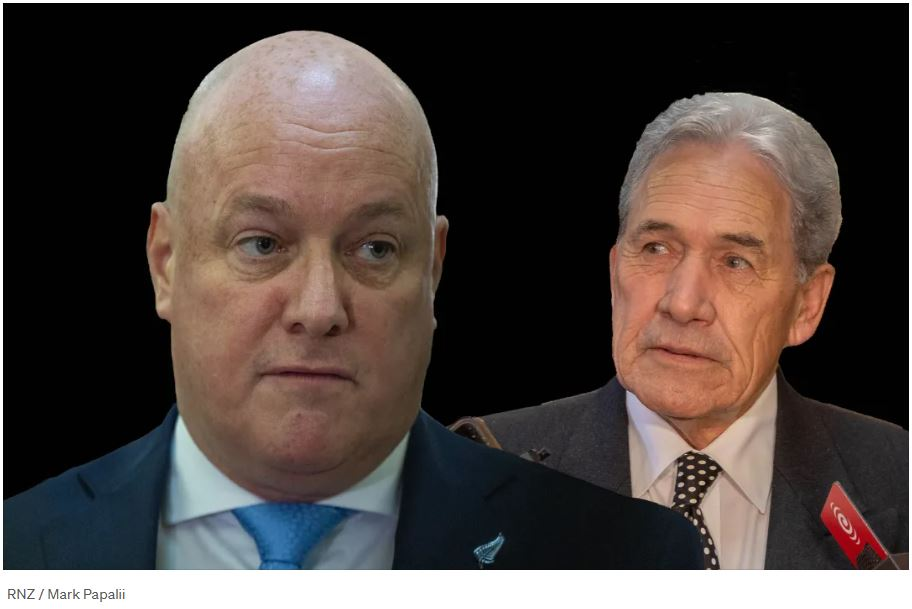
National leader Christopher Luxon has again accused Labour of announcing unfunded spending, despite Labour’s latest policy proposal relying on the same funding mechanism as National’s KiwiSaver policy.
At its pre-election congress over the weekend, Labour unveiled plans to expand the Apprenticeship Boost scheme by extending employer subsidies from one year to two years, widening eligibility to more trades, and introducing grants to help apprentices purchase tools.
The Apprenticeship Boost scheme, introduced in 2020, provides employers with $500 a month to help cover apprentice wages during training.
Labour leader Chris Hipkins said the expansion would be funded through future Budget operating allowances—the same funding source National has proposed for its KiwiSaver policy.
Labour estimates the expanded scheme would cost an average of $56.6 million annually, or $226.4 million over four years. By comparison, National’s KiwiSaver policy is expected to cost about $1 billion over the same period.
Luxon said National supported the Apprenticeship Boost programme but criticised Labour for failing to explain how it would fund the expansion.
“We restored funding after Labour allowed it to lapse,” he said, referring to the previous Labour government’s use of time-limited funding.
“We support Apprenticeship Boost and want to create more opportunities in the trades. But the bigger issue is Labour continues to announce unfunded spending. This latest policy adds another quarter of a billion dollars without explaining how it will be paid for.”
Luxon contrasted Labour’s approach with National’s recent policy announcements, including its KiwiSaver and rooftop solar proposals, saying National had clearly outlined how those initiatives would be funded.
Asked what National would do instead, Luxon pointed to the government’s recent Budget, which doubled places in trade academies and increased funding for Youth Guarantee programmes and vocational training pathways.
Labour campaign chair Kieran McAnulty defended the policy, rejecting criticism that it simply revived an old programme.
“If something worked before, why wouldn’t you bring it back?” he said. “This government cut a programme that delivered results, and we’re proposing to restore and expand it.”
McAnulty said the proposal had received strong support from tradespeople across the political spectrum.
“Every time I mention Apprenticeship Boost, the room is full of nodding heads. It doesn’t matter who they vote for—they know it’s a good policy.”
He added that practical solutions were needed to address workforce shortages, arguing that criticism alone would not solve the problem.
Luxon rejected suggestions he was simply attacking Labour, saying National remained the only party with a long-term economic plan.
“In the past nine months we’ve grown the economy by 2.1 percent, brought spending under control, reduced inflation and interest rates, and supported economic growth,” he said.
Peters disputes India trade deal
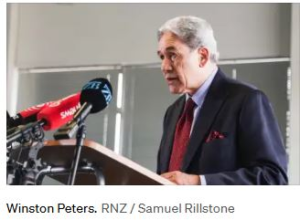
Luxon also dismissed criticism from New Zealand First leader Winston Peters over the proposed India Free Trade Agreement (FTA), accusing Peters of trying to undermine the negotiations.
Peters recently claimed National was secretly restricting immigration from India.Luxon said Peters had opposed the agreement from the outset and was mistaken about its details.”Winston Peters is simply wrong on the Indian FTA, just as he was wrong on the China FTA,” Luxon said.
He argued the agreement would open significant opportunities for New Zealand exporters, describing India as a market of 1.5 billion consumers that could create thousands of jobs and generate billions of dollars in new exports.
Although repeatedly asked what Peters had specifically misunderstood, Luxon did not directly answer. Instead, he said Trade Minister Todd McClay had negotiated the agreement and both governments were satisfied with its terms.
“We’ve negotiated the deal, both sides are happy, and we’re moving ahead. Winston can oppose it if he likes, but it’s happening.”
Government defends policy reversals
Luxon also defended the government’s recent policy reversals on fisheries and conservation legislation, saying changes made in response to public feedback reflected good lawmaking rather than poor planning.”It’s about making better law,” he said. “What’s worse is ignoring legitimate feedback and pushing ahead regardless.”
When asked whether it would be preferable to introduce better-designed legislation from the outset, Luxon maintained the government’s proposals were well developed but said the democratic process allowed legislation to be strengthened through consultation.
“I think it’s important that the public has the opportunity to comment on legislation and improve it,” he said.
TIN Bureau