


Please Contribute Here to help us Grow!
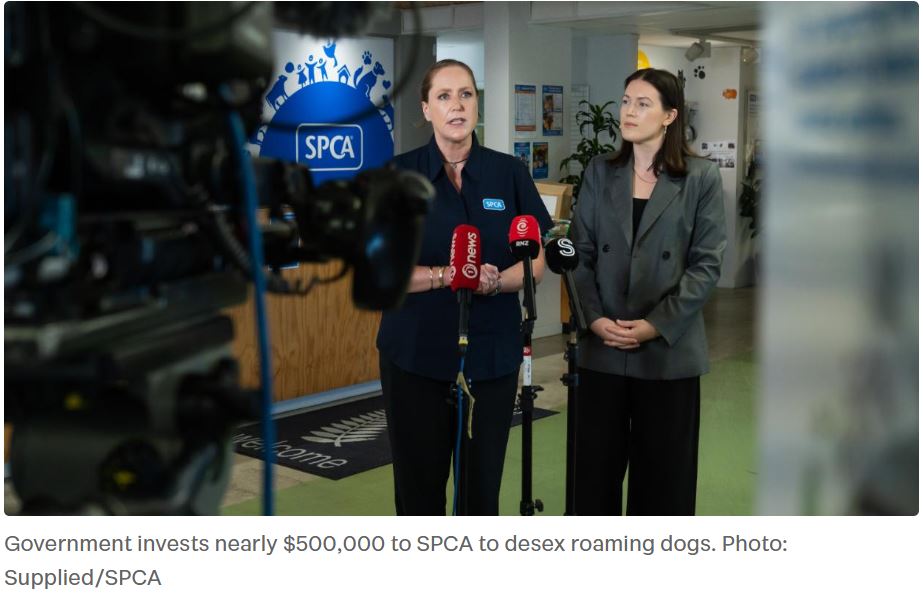
The Government and SPCA are investing nearly $1.2 million to desex roaming dogs in Auckland and Northland, aiming to prevent unwanted puppies, and reduce the amount of dog attacks.
SPCA has contributed $700,000, with nearly $500,000 coming from Brooke Van Velden’s Lottery Minister’s Discretionary Fund too.
The funding was set to deliver a targeted 12-month dog desexing programme aimed at reducing roaming dogs, uncontrolled breeding, and community harm.
An extra $700,000 has been contributed by the SPCA, bringing the total to nearly $1.2m.
“There is an urgent need for preventative action to protect people, animals, and communities in Auckland and Northland,” said Dr Arnja Dale, the SPCA’s chief scientific officer.

The SPCA estimates around 24,000 to 51,000 dogs in Auckland and Northland aren’t desexed.
The programme will focus on dogs most likely to contribute to roaming and uncontrolled breeding, like unregistered or roaming dogs that haven’t been desexed.
It provides early intervention, will prevent litters and reduce roaming behaviour in hopes of lowering the likelihood of serious dog bite incidents, SPCA said.
Access to veterinary services in many rural and remote communities was limited, and cost was a barrier for many owners.
“Working with our veterinary partners across Auckland and Northland, we will remove financial and access barriers that contribute to preventing owners from desexing their dogs,” said Dale.
The programme starts on April 1 this year, running until March 31 2027.
SPCA was calling for an urgent and comprehensive overhaul of the Dog Control Act 1996, as well as national guidelines for council.
The organisation also wanted a national database for dog bite incidents, enforceable dog breeding regulations, and an update of the Code of Welfare for dogs.