


Please Contribute Here to help us Grow!
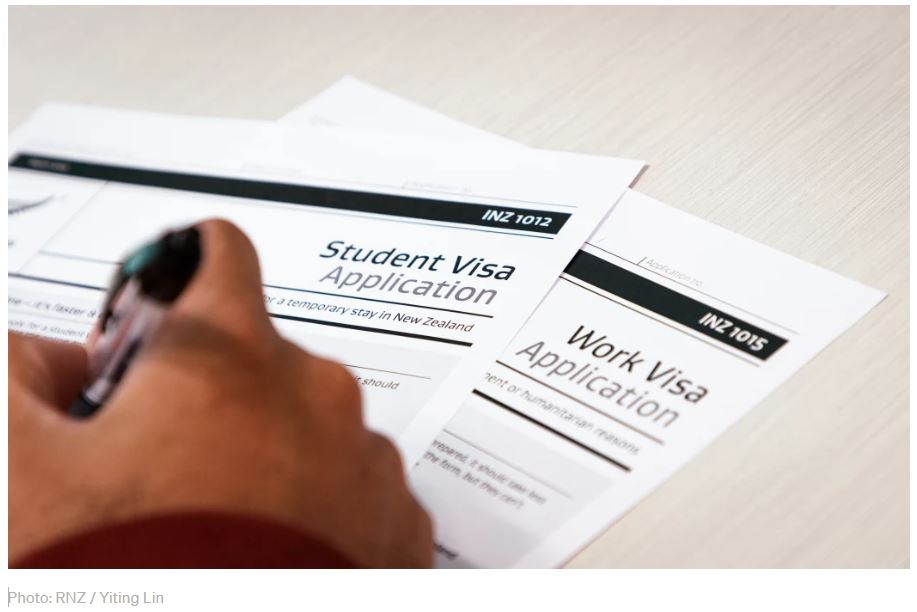
Latest statistics from Immigration New Zealand reveal Indian applicants are waiting nearly twice as long as Chinese applicants for visa decisions, creating uncertainty for immigration advisers and international students alike.
According to the agency, applications from India processed between 1 January and 21 April took an average of 30 working days.
In the same period, applications from China took an average of 16 working days.
The processing times for Indian applications have also increased from an average of 19 working days during the same period in 2025.
“Processing times vary by country due to application volumes and complexity,” said Celia Coombes, director visa at Immigration New Zealand.
“Applications received in 2026 have increased by 11 percent compared with 2025, which can lengthen average processing times,” Coombes said.
“While we are receiving more complete applications, some may still take longer to process.”

Applications from India processed between 1 January and 21 April took an average of 30 working days, according to Immigration New Zealand. Photo: 123rf
Indian applicants have previously faced high rejection rates from Immigration New Zealand.
In 2024, nearly halhttps://www.rnz.co.nz/news/indonz/565025/visa-approvals-for-indian-students-climb-after-steep-declinesf of all student visa applications from India were declined in the first three months of the year.
Things subsequently improved in 2025, with Immigration New Zealand approving 75.4 percent of Indian student visa applications and declining 23.7 percent.
Between 1 January and 21 April, the decline rate for Indian applications dropped further to 21.5 percent, although processing times increased significantly.
Arunima Dhingra, senior immigration adviser and CEO of Aims Global, was not surprised by the delays but remained deeply concerned.
“India is a high volume,” Dhingra said. “High scrutiny but also a high value market for New Zealand.”
She said the delays were creating havoc for immigration advisers and international students alike.
Dhingra said there were multiple reasons behind the delays.
“First, there is higher scrutiny,” she said. “The two other areas INZ is very careful about are funds and genuine intent, but I think what we are seeing is a lack of calibration.”
She said strong applications were getting lost in the system and subjected to prolonged processing times or declined without further engagement.

Arunima Dhingra is a senior immigration advisor and CEO of Aims Global. Photo: Supplied
Dhingra said Immigration New Zealand’s risk calibration was not accurate and that it slowed the system down for everyone, eroding trust in the process.
“New Zealand is competing with destinations in Europe and countries like Germany that are offering lower cost education and scholarships, so we do need to acknowledge where we are,” she said.
“When students miss intakes that only happen once a year, it erodes trust.”
Jagjeet Sindhu, president of New Zealand Forum for Immigration Professionals, agreed.
“It has been very slow since last November,” Sindhu said.
“Some applications have taken more than four months to process and even applicants with good qualifications and strong IELTS scores were declined. I don’t understand it.”
Sindhu also said Indian applications were being subjected to excessive scrutiny.
He called on Immigration New Zealand to take a fairer approach to student visa applications.
“These students generate a lot of money for New Zealand,” he said. “They contribute to the economy.”
In 2024/2025 New Zealand had 84,000 international students, contributing $4.6 billion to the economy, according to Education New Zealand.

Jagjeet Sidhu, president of New Zealand Forum for Immigration Professionals Photo: Supplied
Sindhu said many applications were getting stuck over proving applicants had genuine funds for study.
Dhingra said students pursuing longer duration courses were struggling the most.
“The fund requirements for students doing bachelor’s degrees are quite confusing and the payment plans are complicated, which is forcing some applicants to pursue shorter diploma courses,” she said. “That is not what we want to see.”
Sameena Jaspal, director of 1881 Global Mobility and a senior immigration adviser, also questioned whether the scrutiny being applied to Indian applications was “proportionate, consistent and procedurally fair”.
Jaspal said applications from certain parts of India were often treated as high risk despite applicants holding strong English scores and qualifications.
“Punjab has historically been an area where practitioners see higher decline rates, and that is widely recognised in the industry,” she said.
“Punjab has a long history of migration, which means INZ applies a higher level of scrutiny to applicants from that region on the basis of perceived risk,” she said.
“Whether that scrutiny is always proportionate is a fair question.”
Jaspal said she had come across cases where students lost thousands of dollars in fees after multiple declined applications.
“That is real money and real damage, and it leaves families asking whether New Zealand is worth the risk compared to other countries.”

Sameena Jaspal is a senior immigration advisor and director of 1881 Global Mobility. Photo: Supplied
Jaspal also said many advisers in India were unregulated and could provide incorrect information to students, resulting in poor quality applications, unlike New Zealand where immigration advice is a licensed profession.
“Until that regulatory gap is addressed, a portion of these declines will keep happening regardless of what INZ does with its own processes,” Jaspal said.
Coombes said India remained an important market and Immigration New Zealand had a dedicated engagement adviser in India to provide in-country support to education agents.
“The evidence of these funds must be credible and from a source that we can confirm during the application processing,” Coombes said.
“This can often be more complex from India, and we have discovered instances of fraud in the student visa space from Indian applicants.”
Coombes said Immigration New Zealand encouraged students to apply for visas well ahead of their intended study start date.
“Three months ahead of intended travel is our recommended timeframe and this has been regularly communicated,” she said.
According to Immigration New Zealand, 25,300 applications had been received from international students between 1 January and 21 April, compared with 22,800 over the same period in 2025.
Sindhu, Dhingra and Jaspal all agreed Immigration New Zealand needed to address the delays and improve the system.
“The single biggest improvement INZ could make is to introduce independent third-party financial verification for student visa applications,” Jaspal said.
“Currently, assessing whether funds are genuine places a significant evidential burden on immigration officers, and verifying the source and availability of funds is complex work that sits outside core immigration assessment expertise,” she said.
“The result is inconsistent decision-making and delays.”