


Please Contribute Here to help us Grow!
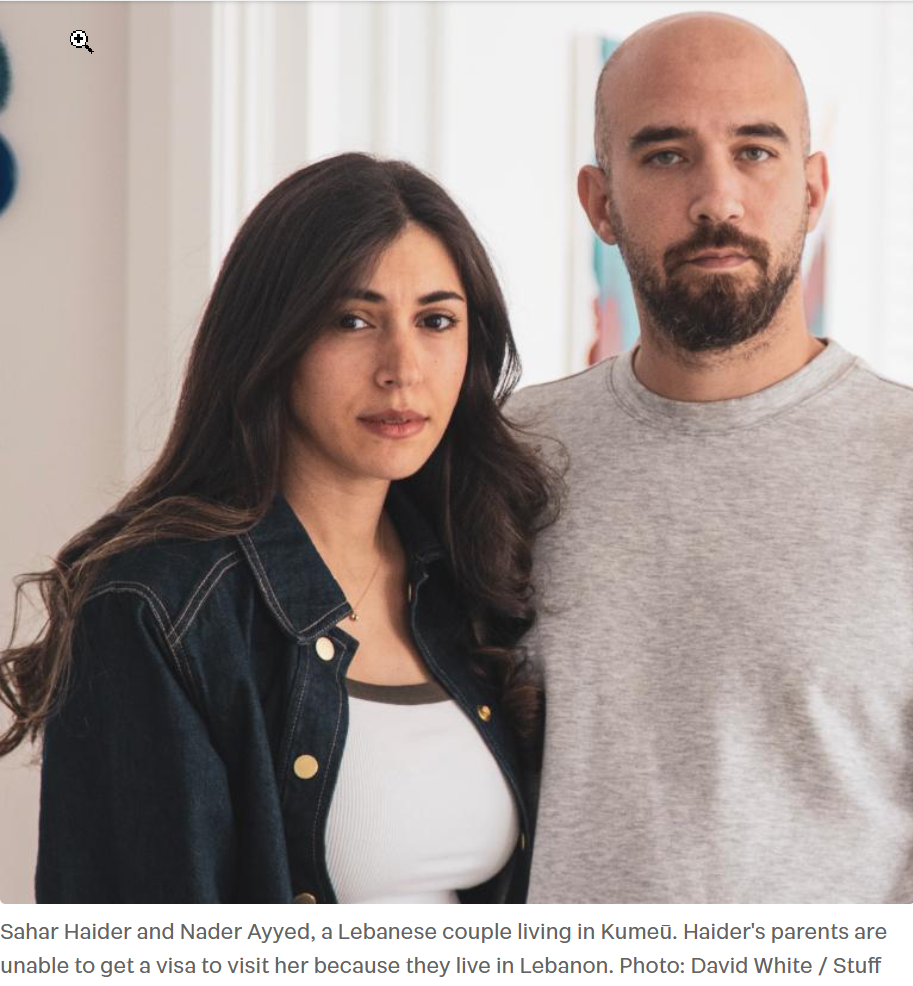
Sahar Haider and Nader Ayyed are parents of a newborn son, nearly two weeks old, and a toddler, aged 2.
Like most couples with newborns, they were hoping to rely on family for support. In 2023, after the birth of their first child, their family visited and provided “essential” help, Ayyed said.
But this time, it hasn’t been possible.
Haider and Ayyed are Lebanese and have been in New Zealand for years. Living in Kumeū, about 25km north-west of central Auckland, Ayyed is a citizen, while Haider is a permanent resident. But their families remain in Lebanon and require visas to visit.
Immigration NZ cited the war in Lebanon as the reason for their denial.
Ayyed and their immigration adviser said the decision was unfair, arguing the evidence provided — which included proof they own businesses in the Middle East, have a dependant child and an upcoming family wedding in Lebanon — should have been sufficient.
“If they came and stayed, they could prosecute me or whatever,” Ayyed told Stuff. “But we’re not lying, they’re not going to stay here. We just want support with our newborn, that’s all.”

A family separated
Ayyed said his wife has been “devastated” since the decision.
“She is struggling with postpartum depression and her parents are not going to be here,” he said. “She’s been crying for the last few days.”
Haider’s mother and sister and Ayyed’s mother were able to visit after the couple’s first child was born in 2023, when visas were “no trouble”.
“I was fairly open and honest about wanting them to come here, stay for a while and travel back when things settled down. We paid around $10,000 worth of immigration advisor fees and whatnot, provided ridiculous amount of documents … and the visas were declined.”
He said he understood the decision but was frustrated.
“At the time, I thought OK, fair enough, there’s a war. But the reason I thought it was doable is because when the Ukraine war happened, everybody was running around trying to get any Ukrainian relatives here, to safety.”

In January, before their second child was born, they applied again — this time only for Haider’s parents. At that point there was no war in Lebanon.
“The war started while the application was being processed, and suddenly Immigration were like, ‘we have concerns on bona fide grounds because there’s a war’,” Ayyed said.
Immigration NZ requested additional evidence to show Haider’s parents would return to Lebanon. Ayyed said their response was extensive.
“We gave a full family tree of all their relatives in Lebanon and evidence showing their daughter is still in university. With our culture daughters are still dependents until they get married, so obviously they have to go back.”
Ayyed and Haider also signed a statutory declaration and offered to pay a $30,000 bond.
Still, the application was declined.
The Haiders’ immigration adviser, John Hunter, said he understood the need for caution but disagreed with the outcome.
“The bona fide intention of these applicants is simply to come and visit their family, support their daughter going through birth and support her after the birth,” he said. “I think under normal circumstances, if there wasn’t a war, we would have got this one approved because we’ve submitted pretty convincing arguments and explanations.”
He said the decision appeared to be based more on the circumstances in Lebanon than the individuals – a view that Immigration NZ’s Deputy Chief Operating Officer Immigration, Jock Gillray, backed up.
“However, the current conflict in Lebanon is highly volatile, and this can affect whether a person is able to return home at the end of their visit. Immigration officers must take this into account.”
A wider problem
A spokesperson for Immigration Minister Erica Stanford’s office acknowledged it can be harder to prove bona fide intent during conflict.
“Unfortunately, we currently have the highest ever backlog of over 4000 asylum claims with the majority … from people who entered New Zealand on a visitor visa,” they said.
“It is the responsibility of Immigration NZ to try and balance facilitating people wanting to visit New Zealand to spend time with family with maintaining the integrity of our border and the risk of people not departing New Zealand as required by their visa conditions.”
But immigration lawyer Bradley So said he believed officers are becoming stricter.
“We have had a few generic visitor visas where Immigration has been extremely narrow in applying the bona fide test. We have had to escalate issues multiple times to get the right outcome,” he said.

Ayyed and Hunter both think Immigration NZ didn’t properly consider the evidence of the Haiders’ ties to Lebanon, but as applicants from overseas they do not have a right of recourse. The only option is to re-apply for a visitor visa.
“I have sent multiple emails to ministers, and all that they tell me is to read the bona fide requirements again and maybe apply again,” Ayyed said.
“I was like, are you guys kidding me? We paid $1000 and applied. We sent them out during a war to get their papers and medical checks. And what more documents could we provide?
“I’m not asking for any sort of support. All I want is for my wife’s parents to come and visit, help us and leave. But how do you prove an intent to leave?”
Green Party immigration spokesperson Ricardo Menéndez March has filed a ministerial intervention request but is not optimistic.
“The Green Party has long called for the Government to create a special humanitarian visa so that when war happens, people have a genuine way to reunite with their families, even for a short period,” he said.
Stanford was the opposition spokesperson for immigration at the start of the Ukraine war.
Her spokesperson said the visa created for Ukrainians reflected specific circumstances, including Covid-19 border settings and the fact New Zealand does not accept refugees from Europe.