


Please Contribute Here to help us Grow!
New Zealand’s fuel stocks have dropped for a second update in a row, with officials warning that maritime delays are likely to become more frequent after revealing one shipment had been held up at loading hubs.
The Ministry of Business, Innovation and Employment published its latest twice-weekly fuel stocks update on Wednesday afternoon, as New Zealand continues to navigate the fallout from the crisis in the Strait of Hormuz and the Iran war.
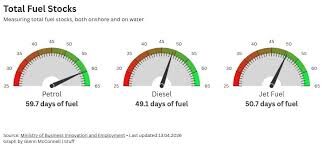
As of 11.59pm on Sunday, total on-water and in-country stocks were at 56.3 days of petrol, 45.4 days of diesel and 47 days of jet fuel — down from 59.7, 49.1 and 50.7 days respectively in the previous snapshot, taken last Wednesday.
“Although this is the second consecutive update with drops in total fuel stock, these changes do not raise any immediate concerns,” an MBIE spokesperson said.
Energy officials revealed one “small shipment” had been delayed in Singapore, and warned that delays around fuel shipping were becoming more frequent.
“The fuel companies have confirmed that supply chains continue to operate, although these types of delays are likely to become more common.”
It is the first update since Prime Minister Christopher Luxon said on Monday that fuel importers had assured the Government shipments were secured through May.
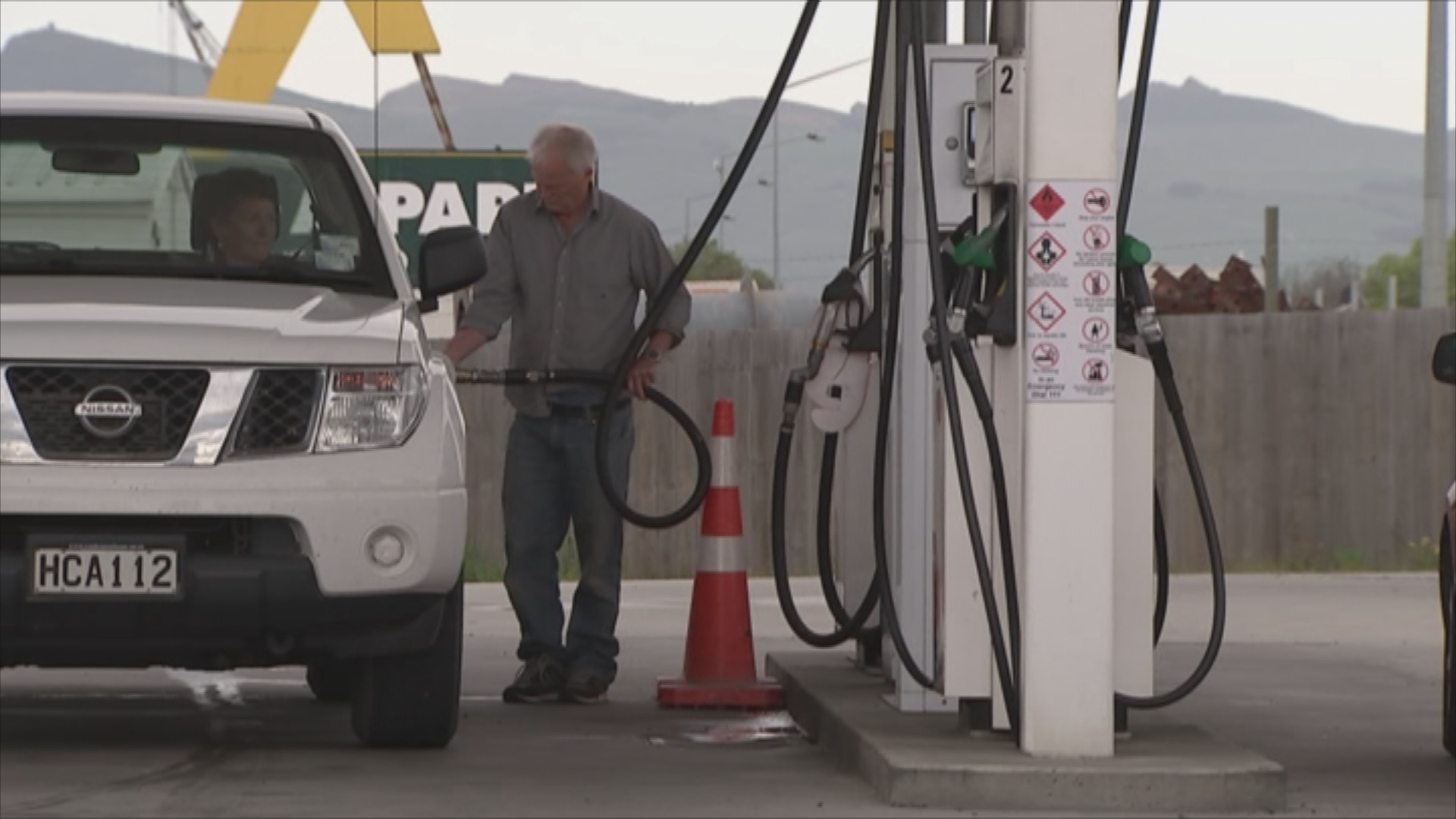
In-country stocks – fuel already held onshore at storage terminals – were at 25.3 days of petrol, 20.8 days of diesel and 21.3 days of jet fuel. Those figures were down slightly from the previous update, which showed 25.6, 21.7 and 25.1 days respectively.
Five tankers were within New Zealand’s exclusive economic zone, with a further seven vessels up to three weeks away – down from nine in the previous report.
Fuel stocks have fluctuated within a broadly stable range over the past month.
Luxon was at pains to reassure Kiwis while speaking to media on Monday.
“New Zealand is actually in quite a strong position even relative to say, Australia,” he said.
“We’ve been talking from there with our fuel importers. They give us a lot of confidence that they’ve got all of their shipments coming through up until the end of May — even some into June.
“A lot of the refineries we’ve dealt with – in South Korea and in Singapore – they’re finding alternative crude sources other than the Middle East, that of course, is giving everyone quite a bit of confidence in the system.”
He also flagged that negotiations to secure additional supply above current levels were expected to conclude within a week.
MBIE has been publishing updates twice weekly since convening the Fuel Sector Coordinating Entity under the National Fuel Plan in mid-March, following events in the Middle East. The country remains in phase one of its national fuel response plan.
Nearly 2000 submissions were received during a two-week consultation on the plan’s more restrictive phases — phases three and four — which closed last Friday.
Luxon said the bulk of feedback came from sector groups and businesses and that officials would take several weeks to work through it before ministers made decisions.
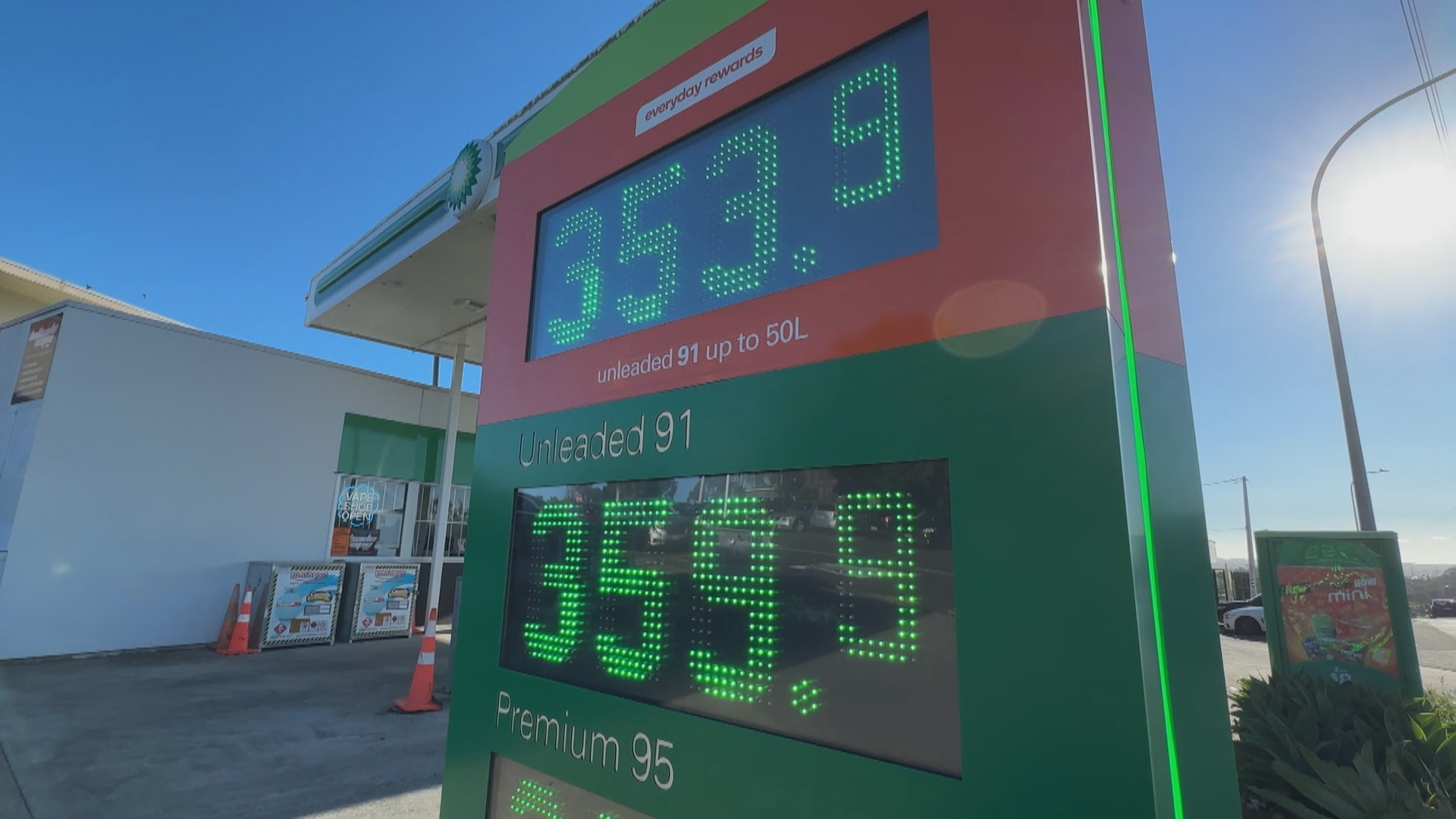
Fuel prices have continued to bite, with a Westpac report released earlier this week finding fuel spending had risen 15% compared with the same period last year.
The average price of 91 unleaded has climbed $1.04 per litre nationwide — a 40% increase — while diesel prices have surged $1.90 per litre. The average volume purchased per transaction has dropped by around 6-8%.
Last month, US bank JP Morgan projected that shipments to New Zealand and Australia could become less reliable in the back half of April, estimating that as the last point at which ships carrying crude processed before the Hormuz closure may reach the Pacific.
Luxon reaffirmed on Monday that, even if a resolution were reached overnight, the effects would not disappear immediately.