


Please Contribute Here to help us Grow!
As a child or even as an adult, what did you enjoy more: listening to a story or reading it yourself? If you think carefully, most people will say listening to the story. Stories have a unique way of expressing ideas. They explain concepts in a manner that stays with us long after we hear them.
Storytelling itself is an art, a tradition passed down by our ancestors. In prehistoric times, storytelling appeared in the form of cave paintings, conveying messages visually before the development of language. As language evolved, the art of storytelling became more refined. Ancient sages used stories to pass knowledge to their students and this tradition continued from generation to generation. The fact that thousands of years of Indian art and culture have survived is, in part, thanks to storytelling, which has preserved our heritage.
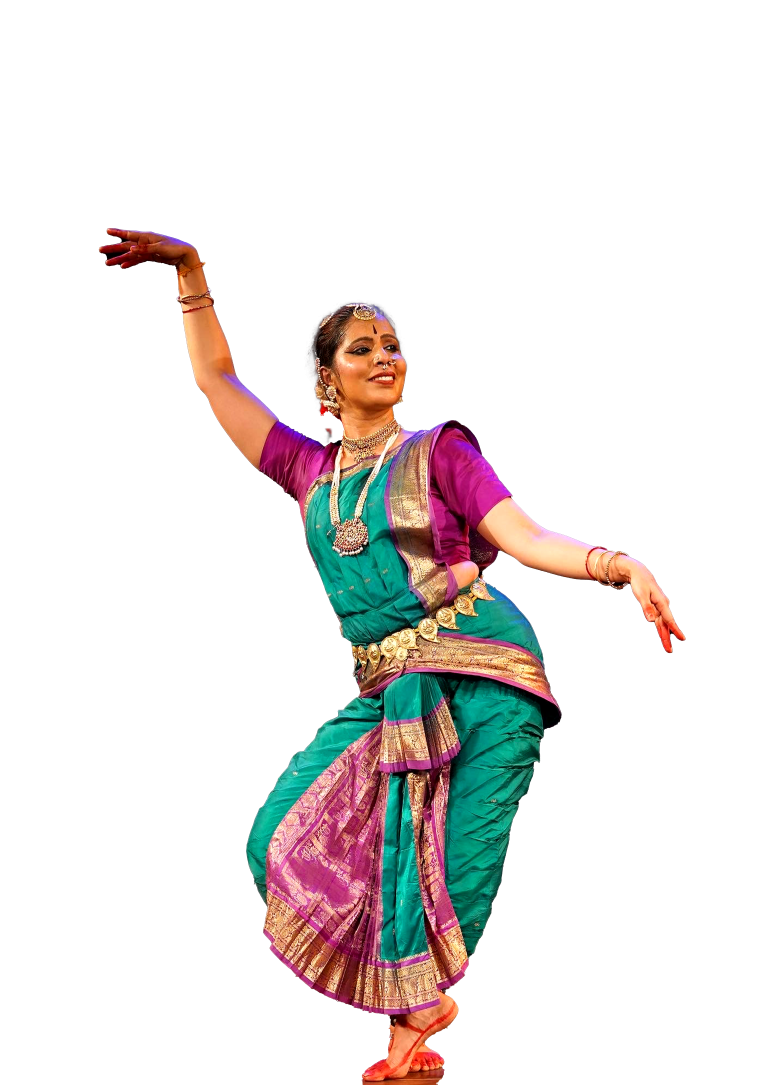
If words are one way to tell a story, Indian art provides another entertaining and powerful medium. Classical dance, music, painting, Harikatha and sculpture, all forms of Indian art breathe life into the stories of our history and tradition. Since ancient times, divine powers and historical narratives have been celebrated through art, making it an accessible and engaging way for people to connect with culture. Society has always sought to instil moral values, and art became a means to do so. Even early Indian films drew on stories from the Puranas, teaching audiences about righteous living, spirituality, the power of the Supreme and the pursuit of the four goals of life (Purushartha). Storytelling in such an entertaining format ensured that these lessons stayed in people’s minds, much like how we remember every scene of a favourite movie. Isn’t this a remarkable way of guiding society along the path of dharma?
Sculpture and architecture in India also reflect storytelling. Temples are adorned with carvings and statues that depict scenes from epics and Puranas. For example, the intricate carvings at the Khajuraho Temples not only showcase artistic mastery but also narrate religious and moral stories, teaching lessons to devotees and travellers alike. This way the audience could understand the moral and spiritual lessons visually, demonstrating how art naturally becomes a storytelling tool.
Some may ask, why does Indian art often focus on stories of divine figures like Rama, Krishna, and the Devi, instead of contemporary subjects? The answer lies in ideals. Do we find ordinary humans living life exactly like Rama or Krishna? These figures represent perfection, virtue and the divine standards that inspire humanity. Their stories remain relevant even today, offering guidance and moral lessons applicable to modern life. In that sense, stories of divine figures are as contemporary as they are timeless.
Storytelling in art allows complex ideas, cultural heritage and moral lessons to be passed down visually, making them accessible even to those who cannot read.
In conclusion, storytelling has always been part of Indian art because it is a powerful way to convey culture, spirituality and values. Through painting, sculpture, dance, katha and other forms, Indian artists have used narratives to educate, inspire and connect people across generations. Art becomes more than decoration, it becomes a living, expressive story that communicates the soul of Indian civilization. Let’s celebrate our culture and traditions, where stories come alive through Art!
-Dr Rashmi Thaper, Nritya Sinchana Dance Company, Auckland