


Please Contribute Here to help us Grow!
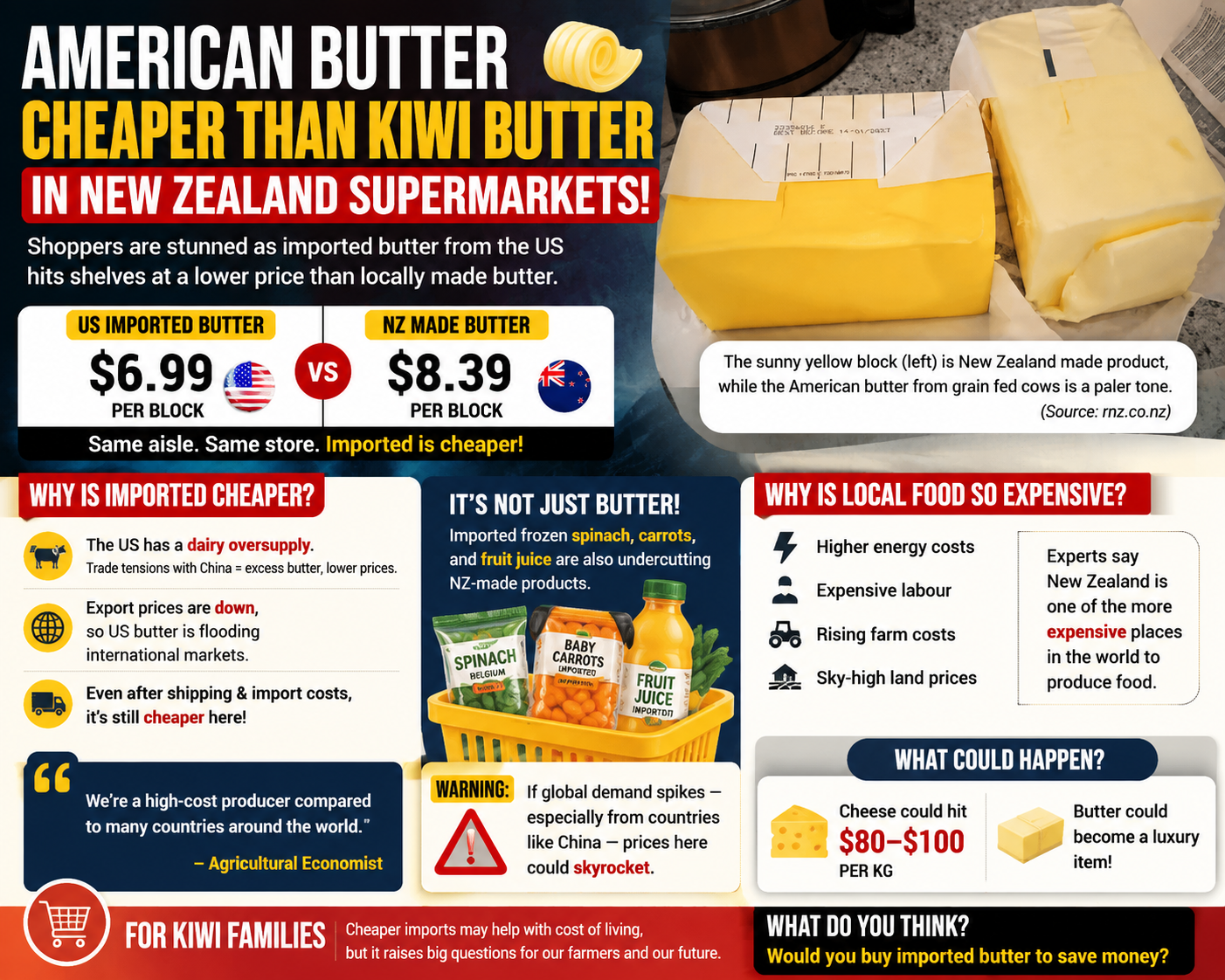
No seriously.At Pak’nSave, shoppers recently spotted US butter selling for $6.99 a block, while locally made butter was priced at around $8.39.

Advertisement

Advertisement
So somehow a product travelling thousands of kilometres across the world, through shipping, freight, packaging and import costs… is STILL cheaper than the one produced by Kiwi farmers right here at home.
Advertisement
And people are confused.
Advertisement
But economists say there’s actually a bigger global story behind this.
Advertisement
Right now, America has a huge dairy oversupply. Their dairy industry has been hit by weaker exports and trade tensions with China, leaving excess butter flooding the local and international market at discounted prices.
Advertisement
Meanwhile in New Zealand, producers are facing rising costs almost everywhere:
Electricity bills are higher
Labour costs continue to rise
Farming operations are more expensive
Agricultural land prices have skyrocketed
Advertisement
Experts say New Zealand is now one of the more expensive places in the world to produce food — even though we’re famous globally for dairy and farming.
Advertisement
And it’s not just butter.
Advertisement
Imported frozen spinach from Belgium, overseas carrots and even fruit juice made from imported ingredients are now competing directly with Kiwi-grown products on supermarket shelves.
Advertisement
For many families struggling with the cost of living, cheaper imports might actually feel like a win.
Advertisement
Let’s be honest — when grocery bills are already through the roof, most people will look at the cheaper option first.
Advertisement
But others are asking:
What happens to local farmers?
Why are New Zealanders paying export-level prices for local food?
And how can a country known for dairy become too expensive for its own people to buy dairy products?
Advertisement
One economist warned New Zealand has become heavily dependent on volatile international markets.
Advertisement
Meaning if a massive country like China suddenly needs more dairy products, global buyers could push prices even higher here at home.
Advertisement
One expert even warned butter and cheese prices could become unaffordable if global demand spikes dramatically.
Advertisement
Imagine paying close to $100 for a kilo of cheese.
Butter becoming a “special occasion” grocery item.
Advertisement
Sounds crazy… but economists say it’s not impossible.
Advertisement
For now, shoppers are left standing in supermarket aisles comparing two blocks of butter and wondering:
Advertisement
“How is the imported one cheaper than ours?”
Advertisement
And honestly… it’s a fair question.
Advertisement
What do you think, New Zealand?
Would you buy imported butter if it saved you money — or would you still support local products? 👇🇳🇿
Advertisement
Advertisement