


Please Contribute Here to help us Grow!
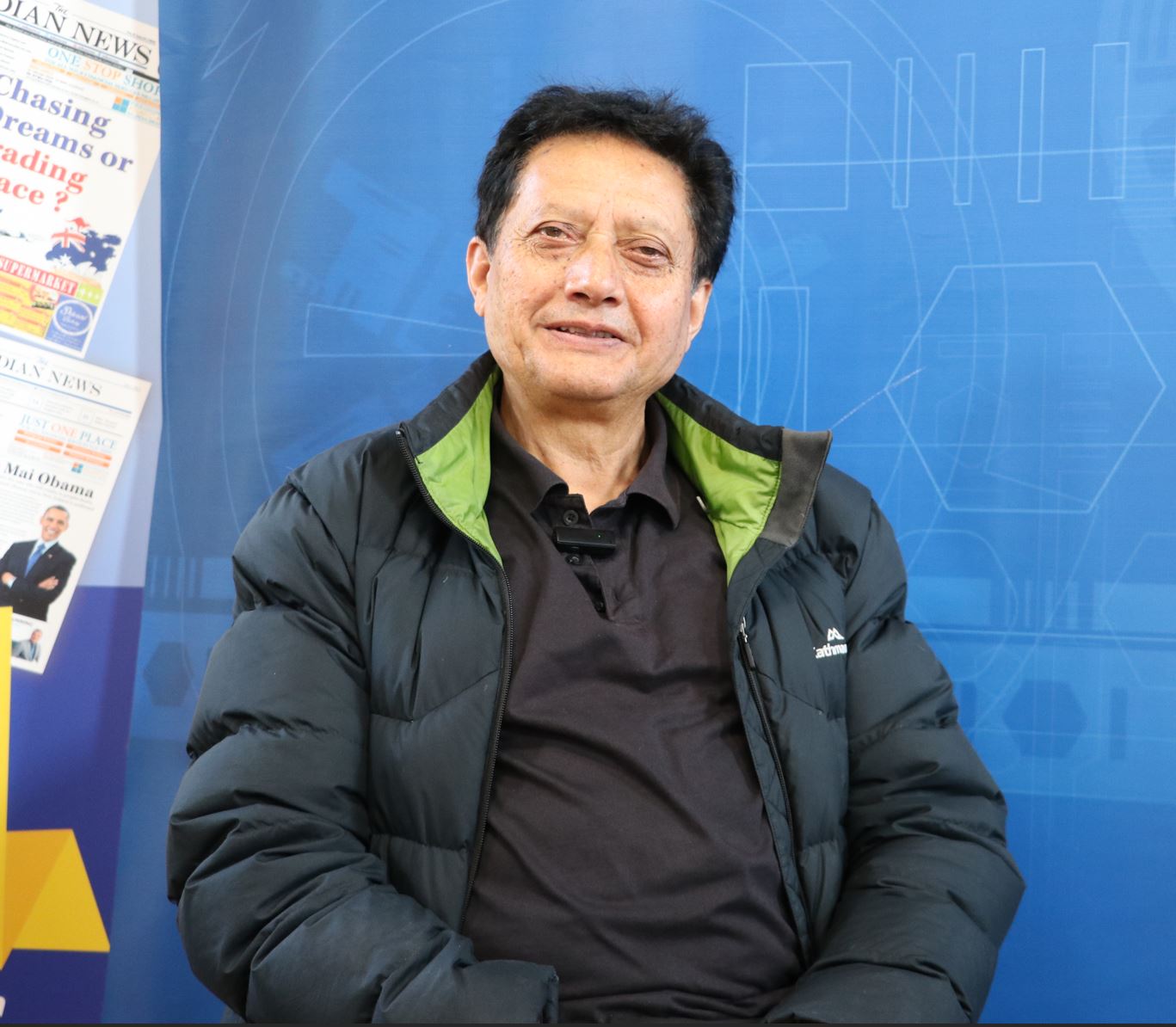
The editor of The Indian News spoke with the leading community leader and President of the New Zealand Indian Central Association (NZICA) following his return from India, where he was part of a high-level delegation led by Trade Minister Todd McClay for the signing of the landmark New Zealand–India Free Trade Agreement (FTA).
The agreement represents far more than an economic arrangement; it marks a clear strategic alignment between two nations with growing shared interests. For Indian New Zealanders, the moment carries added weight, symbolizing recognition, inclusion, and a stronger connection to both homelands.
Members of the delegation described the experience as substantive rather than symbolic. Participation in the signing process underscored the increasingly influential role diaspora communities can play in strengthening bilateral ties. It was not simply about presence, but about contribution.
Support for the FTA within the Indian diaspora has been notably strong, arguably stronger than among the general New Zealand public. This divergence reflects a broader reality: diaspora communities often view such agreements through a wider lens, where trade intersects with identity, connectivity, and opportunity. Acting as a bridge between two economies is both a responsibility and a point of pride.
At the same time, scepticism within sections of New Zealand society, including parts of the political spectrum, is neither unexpected nor unusual. Large-scale trade agreements routinely trigger concerns around competition and economic impact. However, such apprehension tends to diminish as outcomes become measurable. Increased trade flows, stronger business linkages, and visible economic gains are likely to reshape public opinion over time.
Concerns around sectors like agriculture—particularly kiwifruit, highlight the gap between perception and scale. The fear that India could become a competitor overlooks the sheer size of its market. Even if New Zealand were to direct its entire kiwifruit output to India, the per capita distribution would remain minimal. This underscores a fundamental point: India represents an opportunity of scale, not a threat of substitution. By most practical assessments, the FTA stands to benefit New Zealand exporters significantly.
Political resistance has also entered the debate, reflecting the dynamics of electoral strategy as much as policy critique. While some opposition may be rooted in genuine concern, other aspects appear shaped by positioning and narrative-building. Even so, such challenges can serve a constructive function, forcing stakeholders to back claims with evidence and deliver results that validate the agreement.
Beyond economics, the discussion touches on social cohesion. Rising instances of anti-immigrant sentiment have not gone unnoticed within the Indian community. The response, however, has been measured and pragmatic: focus on compliance, uphold standards, and contribute meaningfully. The emphasis remains on conduct rather than confrontation. Remarks from politicians like Shane Jones appear largely aimed at consolidating support within their base during an election year; beyond that political context, they carry little substantive weight and are best not overemphasised.
Indian New Zealanders continue to play a critical role across key sectors, from healthcare and transport to entrepreneurship and small business. Their contributions are both visible and measurable, reinforcing their position as an integral part of the national fabric. Community organisations have complemented this by advocating for fairness, representation, and equal opportunity.
Looking ahead, the expected visit of India’s Prime Minister, Narendra Modi, is likely to add further momentum to the relationship. High-level engagement of this kind has the potential to deepen diplomatic warmth and elevate the partnership to a level comparable with New Zealand’s closest allies. For the diaspora, it offers a platform to demonstrate both achievement and alignment.
As New Zealand moves closer to its next general election, political representation remains an open question for the Indian community. While voting preferences are still fluid, there is increasing awareness of the need for meaningful participation and visibility in national politics.
Ultimately, the New Zealand–India FTA is not just a trade deal, it is a test of vision and execution. Its success will depend not only on policy frameworks but on how effectively businesses, communities, and governments translate potential into performance. -as told to Yugal Parashar