

With just eight months to go before New Zealand heads to the polls, Prime Minister Christopher Luxon says his government has made significant progress in stabilising the economy and laying the groundwork for long-term growth, despite inheriting what he describes as a “very big mess.”
In an exclusive interview with The Indian News Editor Yugal Parashar, Luxon reflected on the government’s two years in office, addressing concerns over inflation, unemployment, immigration, infrastructure, and the recently concluded Free Trade Agreement with India.
Luxon emphasised that the government’s priority was restoring economic stability. When his administration took office, inflation had climbed to 7.3 percent following what he characterised as an 84 percent surge in public spending under the previous Labour government. That, he argued, triggered 12 consecutive interest rate hikes and pushed the economy into recession.
“Spending drives inflation,” Luxon said. “When businesses are squeezed by high interest rates and rising costs, the last thing they want to do is lay off workers—but that’s what happens in a downturn.”
He pointed to inflation now returning to the Reserve Bank’s target band, multiple reductions in the Official Cash Rate, and quarterly economic growth exceeding 1 percent as signs the country is in a recovery phase. The Reserve Bank has also indicated that unemployment is expected to ease over the coming year.
Luxon stressed that sound fiscal policy from the government and responsible monetary policy from the Reserve Bank must work together. “We had the highest inflation in 30 years. Those hurts working New Zealanders. We’ve worked hard to fix that.”
One of the most significant recent developments has been the conclusion of a long-anticipated FTA with India. Luxon expressed strong confidence that the agreement will pass through Parliament with bipartisan backing.
India, world’s most populous nation and projected to become the third-largest economy within a few years, presents what Luxon described as “massive opportunity” for New Zealand exporters and service providers.
“When you have 1.5 billion people and a rapidly expanding middle class—from 440 million to an expected 750 million, there’s enormous potential,” he said.
The Prime Minister highlighted gains for New Zealand’s lamb, wine, and services sectors. He noted that New Zealand’s lamb market share in India had dropped sharply after Australia secured its own trade deal. “Now we have as good, if not better, access than Australia,” he said.
He dismissed concerns raised by New Zealand First leader Winston Peters, who opposes the FTA, as misplaced, just as he had opposed the China FTA in 2008. Luxon also rejected claims linking the agreement to increased immigration, calling them “completely untrue.”
Negotiations have concluded, with legal verification underway before formal signing and legislative ratification.
Luxon said relations with India have improved markedly over the past two years. He described his relationship with Prime Minister Narendra Modi as strong and mutually respectful.
Beyond trade, cooperation has expanded into defence and security, including joint naval engagements. Luxon said New Zealand seeks broader, deeper engagement—spanning economic, strategic, and people-to-people ties.
He confirmed he has extended an open invitation for Prime Minister Modi to visit New Zealand.
The government has faced criticism for scrapping a proposed $6 billion climate resilience fund. Luxon rejected the criticism outright, arguing the fund lacked clear deployment details and would have relied heavily on borrowing.
Instead, he said resilience funding has been integrated into core budgets. He cited projects such as the rebuilding of the Hawke’s Bay Expressway—designed to be twice as flood-resilient—and $200 million invested in flood protection measures nationwide.
Luxon also announced broader infrastructure reform, including changes to the Resource Management Act aimed at halving consent requirements to speed up construction of schools, hospitals, roads, and housing.
Addressing recent anti-immigrant protests, Luxon was unequivocal. “Utterly unacceptable,” he said.
He praised immigrant communities particularly the Indian community for their work ethic and contribution to New Zealand’s prosperity. “They leave family and culture behind, take two or three jobs, and build businesses. We are stronger because of them.”
If re-elected on November 7, Luxon says his focus will remain on “fixing the basics and building out the future.” Key unfinished business includes KiwiSaver reforms to boost retirement savings, lifting education performance to world-class standards, and accelerating infrastructure development.
“I want New Zealand to be the best small, advanced country on earth,” he said. “This country has enormous potential.”
As the election approaches, Luxon is betting that economic recovery, structural reform, and stronger global partnerships, particularly with India will define his government’s legacy and secure a renewed mandate. -as told to Yugal Parashar
Better NZ
Business
Communities
Editorials
Ethnic media
General News
Kiwi
Maori
News
NZ NEWS
Politics
Tourism
Updates
World
Recovery, Reform, Resilience:PM Luxon

ByThe Editor The Indian News
Feb 26, 2026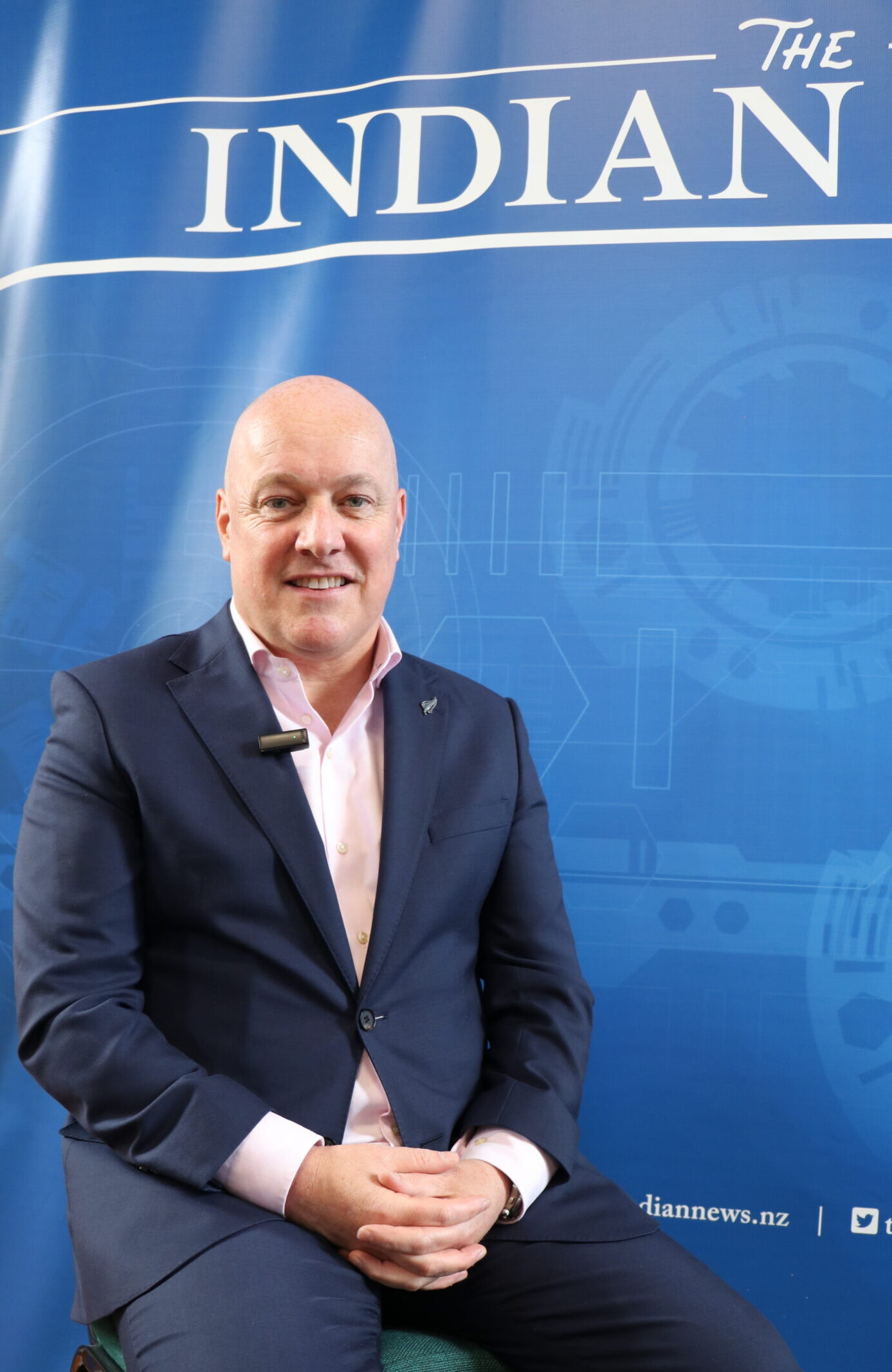
By The Editor The Indian News
Yugal Parashar, Editor, The Indian news