


The Government has announced the biggest shake-up of New Zealand’s driver licensing system in more than a decade — and for many Kiwis, the headline is simple: it will soon be cheaper and easier to get a full licence.
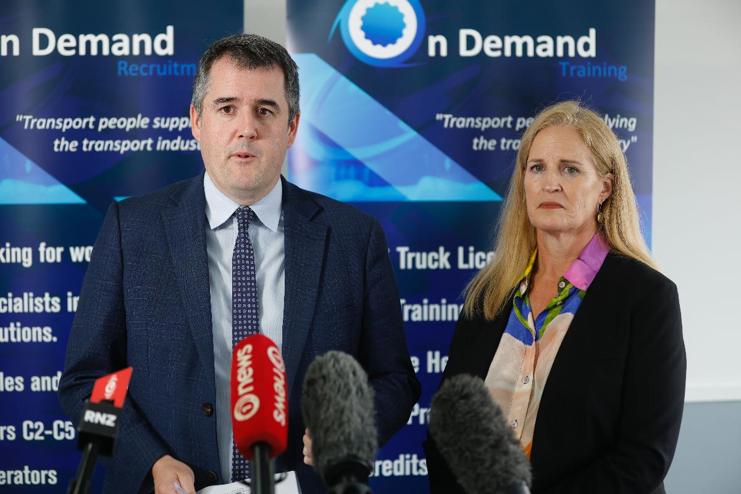
Speaking in Auckland, Transport Minister Chris Bishop said the current system has become “expensive, outdated and no longer works as well as it should.” The new approach, he says, aims to remove unnecessary costs and barriers while still keeping road safety front and centre.
At the heart of the changes is one major shift: drivers will no longer need to sit a second practical test when moving from a restricted licence to a full licence.
“New Zealand is an outlier in requiring two practical tests,” Bishop said. “If drivers show safe behaviour while on their restricted licence, there’s no reason to put them through another costly test.”
The changes follow public consultation last year and mark the first major overhaul since 2011, when the learner licence age was lifted from 15 to 16.
What’s changing — and why it matters
The new system tries to strike a balance between access and safety. While some steps are being removed to cut costs, other parts of the process are being strengthened to ensure drivers gain more real-world experience before going solo.
Here’s what drivers can expect from January 2027.
No more full licence practical test (Class 1)
Drivers moving from restricted to full licences for cars will no longer sit a second practical test — a move expected to save both time and about $80 in total licensing costs.
Longer learner period for under-25s
Young drivers will now need to spend 12 months on their learner licence instead of six.
However, there’s flexibility:
- Under-25s can reduce this back to six months by logging practice hours or completing an approved practical driving course.
New restricted licence periods
- Under-25s: 12 months on restricted
- Over-25s: 6 months on restricted
- No option to shorten this with a defensive driving course.
Demerits mean more time
Drivers who receive demerit points while on their restricted licence will face an extra six months on restricted — rather than having the clock reset completely.
Fewer eyesight screenings
Eyesight tests will now only be required at:
- First licence application
- Licence renewal
This applies to car and motorcycle licences.
Zero-alcohol rule expanded
All learner and restricted drivers — regardless of age — will now be under a zero-alcohol limit.
Stronger oversight of training providers
NZTA will have greater powers to monitor and suspend driver training course providers to ensure quality standards.
What’s not changing
- No changes to rules for overseas drivers
- No changes to requirements for senior drivers
- Existing licence tests remain for now, but NZTA will review learner and restricted tests
- Current rules stay in place until 25 January 2027
- The zero-alcohol rule will be introduced separately before then
A formal review will be conducted three years after implementation to measure the impact on road safety, employment, and economic outcomes.
Road safety groups welcome the shift
The AA has backed the changes, saying they put the focus where it belongs: real driving experience rather than simply passing tests.
AA road safety spokesperson Dylan Thomsen said:
“Time alone doesn’t make safer drivers — experience does. A longer learner period, combined with incentives to gain real driving experience or undertake professional training, gives young drivers a much better chance of developing the skills and judgement they need.”
The bigger picture
This overhaul signals a shift in thinking. Instead of relying on multiple tests, the new system puts more trust in supervised practice, driving behaviour, and experience behind the wheel.
For many young drivers and families, the changes could reduce costs and pressure. For the Government, it’s an attempt to modernise a system that hasn’t seen major reform in 14 years.
And for New Zealand roads, the hope is simple: better drivers, not just better test-takers.-TINBureau