


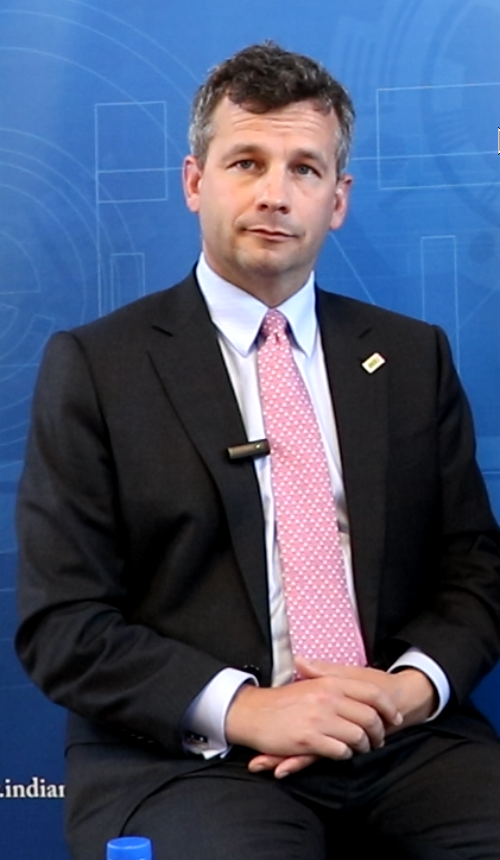
ACT Party leader and New Zealand Deputy Prime Minister David Seymour says the ACT Party is firmly committed to the principle of equal rights for all New Zealanders, without any discrimination based on ethnicity, religion, or skin colour. Speaking exclusively to The Indian News, Seymour emphasized that New Zealand is a nation built by migrants. While acknowledging Māori as the early settlers, he said he disagrees with the notion held by some that being earlier arrivals should entitle any group to special privileges over others. Seymour said that his government has worked to address historical imbalances and remove what he sees as discriminatory policies.
He highlighted several actions taken by the coalition government, including abolishing the Māori Health Authority, repealing the Three Waters reforms, ending different bowel cancer screening ages for Māori and non-Māori, and reviewing the Treaty of Waitangi principles. According to Seymour, these steps were necessary to ensure that no group receives preferential treatment and all New Zealanders are treated equally. He added that he is proud to have played a role in bringing these changes to New Zealand’s political landscape.
The ACT leader said his coalition government was elected on three core promises: tackling the cost of living, reducing crime, and addressing co-governance. He expressed satisfaction that the government has made significant progress on all three fronts, although some work remains—particularly in strengthening the economy. Seymour attributed economic challenges to what he described as poor financial management by the previous government. He said it will take time to repair the damage done by previous government, but he is glad that inflation has dropped below 3% and interest rates are starting to decline, easing pressure on households. On law and order, Seymour said he is pleased that the government is enforcing the three-strikes legislation more strictly, which he believes has helped reverse the rising crime trends. He criticised the previous Labour government for being too soft on crime, arguing that their approach cost hardworking New Zealanders millions of dollars while failing to deter offenders. Seymour concluded by saying that the coalition has acted on all three of its key commitments within its first two years in office and will continue pushing forward with its reform agenda.
When asked about his experience serving as Deputy Prime Minister, he said the role has been both exciting and challenging. Acting as Prime Minister at times required him to make difficult decisions, such as responding to the arrival of a Chinese vessel and managing the Nelson and Marlborough flood situations. Aside from these moments, he added, the responsibilities were largely those of standard ministerial duties.
David Seymour appeared uncomfortable when questioned about his public dispute with coalition partner Winston Peters. He responded that The Indian News should not engage in spreading what he called misinformation originating from mainstream media. Discussing India–New Zealand relations, Seymour said ties between the two countries continue to strengthen, with growing cooperation in sports, energy, and defence. He praised the Indian community for its immense contribution to New Zealand’s rich and diverse cultural fabric, describing it as a law-abiding, peaceful community that has greatly enriched the nation socially and culturally.
Addressing the presence of anti-India elements in New Zealand, Seymour reiterated his firm stance on free speech: everyone has the right to protest in a free society, if it is done within the boundaries of New Zealand law. Despite differences on some key issues, he said he remains optimistic that a Free Trade Agreement between the two countries will be achieved soon. On the topic of people leaving New Zealand in record numbers, Seymour argued that migration is not a new phenomenon—New Zealanders have been moving overseas since the 1980s in search of better opportunities. He added that this is not a cause for alarm, and many of those who leave may return when circumstances change.
Seymour also emphasized the Indian community’s significant contributions to New Zealand in business, culture, food, sports, and even politics. He noted that his party intends to consider more candidates from the Indian community for the 2026 elections. When asked about his efforts to ensure equal treatment for all migrants, Seymour acknowledged that such change could take time. However, he expressed confidence that the process has begun and that equality will eventually be achieved. -as told to Yugal Parashar