


Fonterra’s decision to sell its consumer dairy brands—including household staples Anchor and Mainland—to French multinational Lactalis has stirred major debate across New Zealand’s farming and political circles. The $4 billion deal marks a dramatic restructuring of the country’s largest dairy cooperative and has drawn fierce criticism from New Zealand First leader Winston Peters, who argues it risks surrendering control of New Zealand’s dairy heritage.
Fonterra, owned by about 10,000 farmers, buys milk from its members and processes it into a range of products. Yet consumer goods like milk, cheese, butter, and yoghurt make up less than 7 percent of its total milk solids sold. The majority—about 79 percent—are exported as dairy ingredients such as powders and protein solutions, while 14 percent are sold in food service.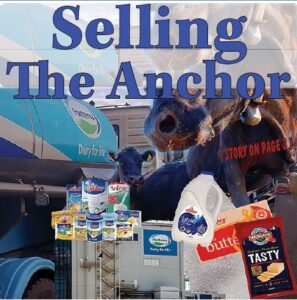
In August, Fonterra announced it would sell its consumer and associated businesses—including brands Anchor, Mainland, Kāpiti, Fresh’n Fruity, Anlene, Anmum, Perfect Italiano, Fernleaf, and Western Star—to Lactalis for $3.845 billion. When adding Australian Bega licences, the sale exceeds $4.2 billion. It also includes several manufacturing sites in New Zealand and abroad. Once completed, shareholders will receive a tax-free $2 per share payout—equivalent to roughly $200,000 for an average farm.
Fonterra’s board says the sale allows it to focus on its core strengths: producing high-value dairy ingredients and food service products. Chairman Peter McBride said the decision was made after assessing “how as a co-op we create value for our owners.” Chief executive Miles Hurrell added that partnering with Lactalis—the world’s largest dairy company, with €30 billion (NZ$60b) in annual sales—would take these brands “to the next level,” while Fonterra continues supplying milk under long-term agreements.
Still, the move has proven divisive. Shareholders began voting on 7 October, with results due at the end of the month. Approval from at least 51 percent of shareholders is needed, and the sale could be finalised by early 2026.
Winston Peters has fiercely opposed the deal, warning that Fonterra is “giving away” decades of New Zealand’s hard-earned brand reputation. In an open letter to farmers, he urged them to reject the proposal, saying, “Quality always sells. Why else would the largest dairy company in the world offer almost $4 billion to own Anchor?” He also questioned whether Fonterra executives would profit from the deal and whether Lactalis could later end milk supply contracts, effectively cutting New Zealand farmers out of their own brands.
Fonterra rejected these claims, saying Peters’ comments misrepresented the deal’s terms. The company said supply agreements with Lactalis last at least six years for processed dairy and ten years for raw milk, both requiring lengthy notice periods before termination.
Political reactions have been mixed. ACT Party leader David Seymour defended Fonterra’s right to make its own commercial decisions, saying, “This is not a socialist country. Fonterra is owned by its farmers, not the government.” The debate even got personal, with Seymour suggesting only those who “get up at 4am and milk cows” have the right to comment—prompting Peters to reply that he had done just that for nearly two decades.
Industry experts say the sale raises legitimate questions. Lincoln University agribusiness lecturer Nic Lees said Peters’ warning resonates with many New Zealanders because the brands are tied to national identity. “Selling them transfers part of our food heritage,” he said. Still, he noted that Fonterra’s consumer division has delivered inconsistent returns and tied up capital that could be better used elsewhere.
Agriculture professor Alan Renwick also cautioned that narrowing Fonterra’s focus could reduce diversification and future value creation. “We need to consider what we’re giving up,” he said.
The sale will be reviewed by the Overseas Investment Office, but experts believe approval is likely since the government’s current “national interest” tests mainly assess economic and security risks.
Fonterra insists the move is strategic and forward-looking, but for many—including Peters—it feels like the end of an era. Whether this sale represents sound business strategy or the surrender of Kiwi dairy heritage depends on which side of the farm fence you stand on. -TIN Bureau