


Please Contribute Here to help us Grow!
Navratri festivities began with great enthusiasm! This nine-day Hindu festival, dedicated to the worship of Goddess Durga, started on Thursday, October 3rd, and will end on Sunday, October 12th. The word “Navratri” means “nine nights” in Sanskrit, during which nine different forms of Maa Durga are venerated. Each day, devotees offer prayers to a distinct form of the goddess, and through dance, music, and devotional songs, they express their reverence and devotion.Navratri is celebrated twice annually. The first celebration, called Chaitra Navratri, occurs in March or April, while Shardiya Navratri, the more popular of the two, takes place in September or October. Additionally, there are two lesser-known Gupta Navratris, observed during the Shukla Paksha of Magha and Ashadha months. Though the customs vary across regions in India, the underlying theme of Navratri remains the same: the triumph of good over evil. In many parts of the country, the festival is also linked with the harvest season, which adds to its cultural significance. Families and communities gather to partake in the festivities, blending tradition with celebration.In West Bengal, the celebration of Durga Puja, which coincides with Navratri, is the grandest event on the religious calendar. Large, elaborately crafted statues of Maa Durga are installed in pandals (temporary structures) specifically built for the occasion. These structures become centres of worship and celebration, where people come together to offer prayers, admire the statues, and partake in community activities. The sight of beautifully adorned idols and decorative pandals, coupled with the devotional fervour of the people, creates an atmosphere of reverence and joy.
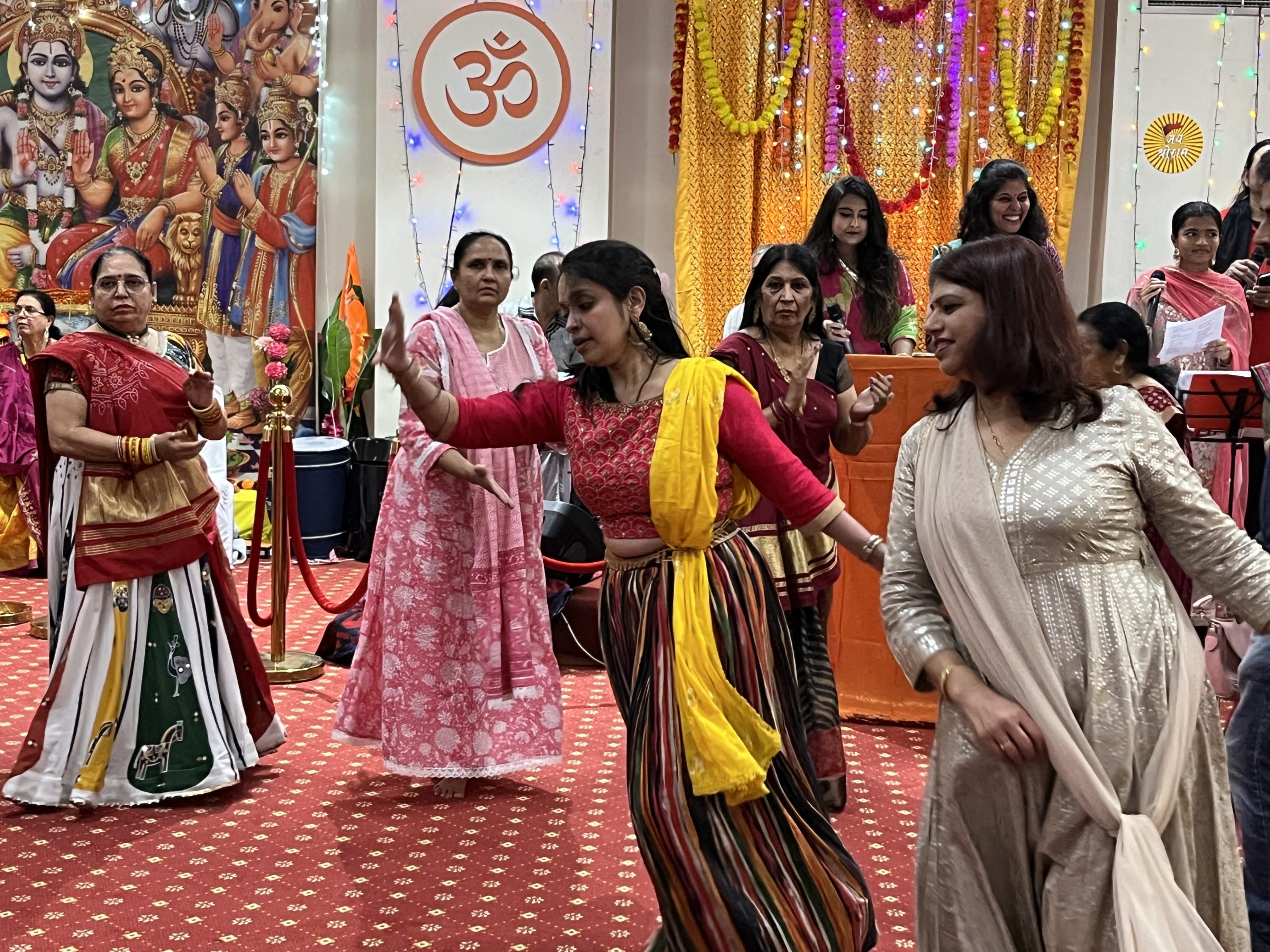
In Gujarat, the festival is marked by the famous Garba dance, a traditional folk dance performed by large groups of people. Thousands of men, women, and children, dressed in vibrant traditional attire, dance in synchrony to live music. The rhythmic clapping and swirling movements of Garba create an electrifying atmosphere, and the dance often continues late into the night. Garba’s popularity has grown tremendously over the years, and it is now performed by Hindu communities all over the world.
Even in a small country like New Zealand, Navratri is celebrated with the same level of devotion and enthusiasm. The Garba dance has become a major feature of the celebrations, with events held at temples and other venues across the country. One of the most popular places to celebrate Navratri in New Zealand is the Bharatiya Mandir in Balmoral, Auckland, which is the country’s oldest Hindu temple. Every year, hundreds of people gather at the temple to participate in Garba, dance to live music, and celebrate with friends and family. The temple is filled with the sound of traditional instruments and songs, as devotees dance in circles for hours, their energy reflecting their devotion.
The nine-day celebration at Bharatiya Mandir will culminate on Saturday, October 11th, to be followed by Dussehra on Sunday, October 12th. Dussehra marks the victory of good over evil and brings Navratri to a close. However, the festive season continues with Diwali, the biggest Hindu festival, just 20 days after Dussehra. Thus, Hindu community will be immersed in a month-long celebration of devotion, lights, and joy, lasting through mid-November.
-Yugal Parashar