


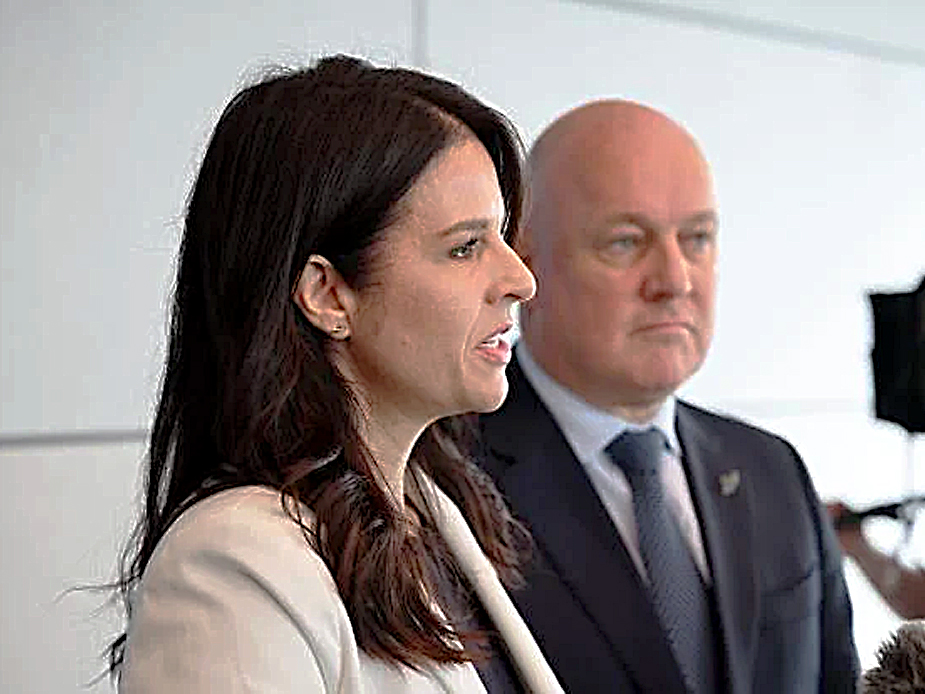
Prime Minister Christopher Luxon and Education Minister Erica Stanford are set to outline a significant shift in how student progress is measured and reported in New Zealand schools, speaking this afternoon from Cockle Bay School in Howick, Auckland. The announcement will be livestreamed.
At the heart of the update is a move toward what the Government calls “nationally consistent assessment and reporting” across primary and intermediate schools — a change Stanford says is long overdue and designed with one key audience in mind: parents.
From this year, parents will begin receiving reports that are clearer, more uniform across schools, and easier to understand when it comes to how their child is progressing in the basics — reading, writing, maths, and attendance.
What’s changing for parents?
Under the new system, parents of students in Years 0 to 10 will receive reports that include:
- One of five clear progress markers describing their child’s learning stage
- A simple explanation of why that marker was given
- Practical guidance on how parents can support the next steps at home
- Information showing progress over time
- Attendance details
- Updates on phonics achievement
- Results from twice-yearly progress check-ins
The five progress markers — presented in both English and te reo Māori — are:
- Emerging (Me hāpai ako)
- Developing (Kua koke whakamua)
- Consolidating (Whakatōpū)
- Proficient (Kua tutuki)
- Exceeding (Kua hipa rawa)
The aim is to replace what many parents have described as vague or inconsistent reporting with something that clearly answers the question: How is my child really doing?
Why the change?
Stanford said the move follows strong advice from education experts, including the Education Review Office (ERO) and the New Zealand Assessment Institute (NZAI), both of which have raised concerns about the lack of reliable, comparable information available to parents and the wider system.
“For too long, New Zealand has lacked consistent, reliable information on how students are progressing in the basics,” she said.
Without standardised reporting, she argues, it has been harder for parents to understand their child’s learning journey — and harder for schools and the system to step in early when students need extra support.
What are the twice-yearly check-ins?
A key part of the new approach is the introduction of two progress check-ins each year for students in Years 3 to 8. These will be supported by a new monitoring tool called SMART, and will line up with mid-year and end-of-year reports.
Stanford stressed the tool is not a test-heavy system and is not designed to override teacher judgement.
“The SMART tool is a low-stakes, light-touch way to support consistent assessment,” she said.
Teachers will still rely on their professional expertise, classroom work, and observations. The tool is intended to support that judgement and ensure parents receive information that is both clear and consistent, no matter which school their child attends.
Already trialled in schools
The system has already been piloted in 85 schools, involving around 12,000 student assessment engagements. According to the Government, feedback from those schools has been positive, with teachers reporting that the approach helps make reporting more meaningful for families.
The bigger picture
For the Government, this is as much about transparency as it is about learning outcomes. The intention is to create a system where parents don’t have to guess what school reports mean, and where early warning signs in a child’s learning can be picked up sooner.
As Luxon and Stanford prepare to speak, the message is clear: this is about making student progress simpler to understand, easier to track, and harder to overlook — both for parents and for the education system itself.Tin Bureau