


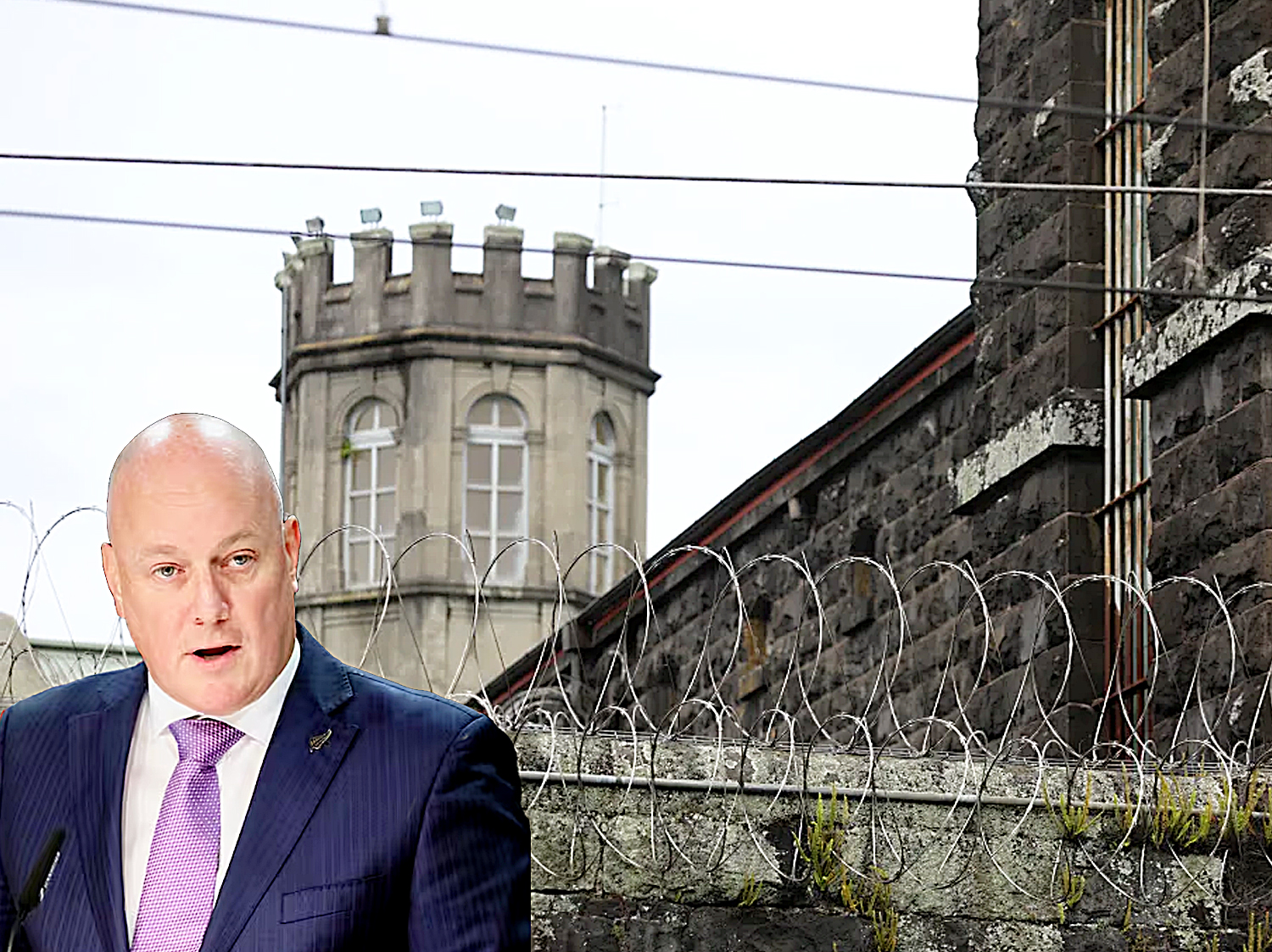
Prime Minister Christopher Luxon has described New Zealand’s rapidly expanding prison population as “a good thing”, framing the rise as evidence that the government’s hard-line approach to crime is working. His comments came as he acknowledged that the government is falling behind on its high-profile pledge to add 500 new police officers, a target he earlier insisted would be met within the first two years of his term.
Speaking to journalists at Parliament on Tuesday, Luxon was questioned about the country’s prison muster, which has reached historic levels and is now approaching 11,000 inmates. Rather than expressing concern, he welcomed the increase. “Absolutely, that’s a good thing,” he said, reiterating twice that he saw the soaring numbers as a positive indicator.

Luxon argued that the government would not shy away from the financial burden that comes with tougher enforcement and higher incarceration rates. “I understand the financial implication of restoring law and order in New Zealand, but we make no apologies about that,” he said. “The cost will be what the cost will be.” He contrasted this approach with that of the previous Labour government, which had set a goal of reducing the prison population by 30 percent. According to Luxon, his government is taking a fundamentally different path—one centred on prioritising public safety over reducing inmate numbers.
“Yes, we have a high prison population,” he acknowledged. “Yes, we’re investing in more prisons and more capacity. And it’s pretty simple: we do not want people in the community committing crimes.”
Labour leader Chris Hipkins offered a starkly different perspective, warning that the escalating muster should concern all New Zealanders. He recalled that even past National governments had acknowledged that mass incarceration alone does not effectively lower crime, citing former Prime Minister Bill English’s description of the approach as “a moral and fiscal failure”. Hipkins argued that real safety would come from strategies focused on reducing crime itself, not just increasing imprisonment.
Finance Minister Nicola Willis, however, backed Luxon’s assessment, insisting the government was prepared to manage the rising financial costs of a larger prison population. “Our government campaigned on keeping New Zealanders safer, and that means locking up dangerous criminals,” she said. “We are doing that, and that is an appropriate price to pay for New Zealanders’ safety.”
While the government is firm in its commitment to being tougher on offenders, its efforts to grow police numbers are progressing more slowly than promised. Luxon reaffirmed the coalition’s goal of hiring 500 additional police officers but softened expectations around timing. “It’s taking longer than we had hoped for,” he admitted. “It’ll be what it will be.” This marks a significant shift from his assured tone a year ago, when he repeatedly told the public the target would be met within two years of taking office, urging voters to “judge me by the results”.
Under the National–NZ First coalition agreement, constable numbers were supposed to reach 10,711 by 27 November 2025. However, concerns over the feasibility of this timeline have been growing. In December 2024, senior police officials told MPs that meeting the target by the agreed date would be “very, very challenging”, and that mid-2026 was a more realistic projection.
Police Minister Mark Mitchell has since repeatedly downplayed the importance of a strict deadline. In May, he suggested he would not get “hung up on a date”, and on Tuesday he again emphasised quality over speed. “We’re not going to rush it,” Mitchell said. “We’re going to take our time, and we’re going to have a full focus on standards. We have committed 500. We have funded 500. We’ll deliver 500.”
NZ First leader and Deputy Prime Minister Winston Peters took a similarly relaxed view, saying the target might be achieved “two or three months” later than originally promised but insisting the delay “won’t matter” in the long run.
Together, the comments reflect a government determined to push forward with its law-and-order agenda, even as the costs rise and timelines shift.
-TIN Bureau