


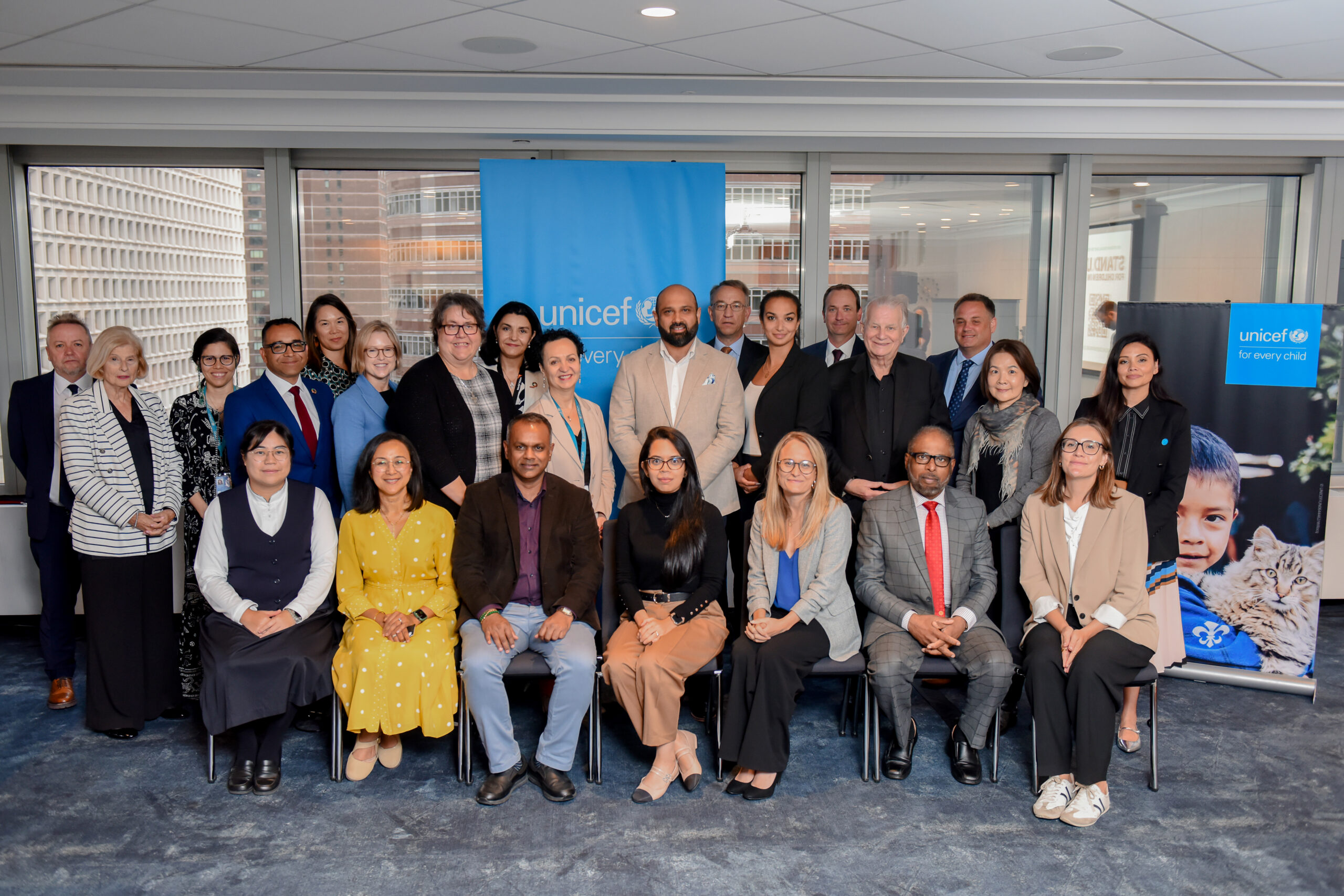
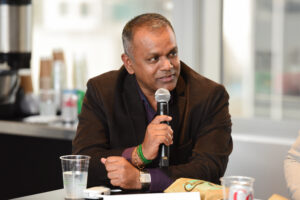
Well known community leader Ram Lingam, recently returned from a whirlwind tour, travelling from Auckland to cross the USA from West coast to east coast and back for a three-day flash visit at the United Nations General Assembly’s 80th Session (UNGA 80) in New York. Ram carried the voice of Hindu and interfaith communities and was the only Hindu leader and interfaith leader invited from New Zealand to the Faith Leaders Roundtable 80 on September 23rd, 2025—an event organised by UNICEF highlighting the critical role of community leaders in humanitarian aid. “The roundtable framed a sobering task,” referring to the statistics presented by UNICEF officials at the roundtable. It spoke of “a moment of crisis for children” and the “protracted and complex” emergencies that “raise moral and ethical questions about justice, dignity, and equity.” Ram’s community leadership positions include serving as a Director of Partnerships for the Hindu Foundation New Zealand, leading the Inter-Faith Council as its President, acting as Hindu Chaplain at Auckland University of Technology, and being a trustee on the board of Chinmaya Mission New Zealand.
The stark reality of child suffering
During the Roundtable, the context of the discussion was set by the stark realities presented by UNICEF officials. Lucia Elmi, the Director of Emergency Operations, provided statistics that demanded action. According to the data, over 473 million children—nearly one in five globally—live within conflict zones. Violence resulted in 32,990 grave violations against children verified in 2023 alone. In places like Haiti, violence has resulted in the displacement of 680,000 children in a single year, with over 1 million facing food insecurity. Furthermore, the threat of famine in Sudan and Gaza represents an immediate threat to young lives, and vulnerable children among populations like the Rohingya also require urgent attention. These numbers formed the baseline for the discussion, compelling faith leaders and global actors to respond effectively.
Hindu partnerships at the global level
Speaking to The Indian News, Ram elaborated on the need for greater coordination between Hindu organisations and global bodies like UNICEF. Recollecting the significant scale of Hindu-led global aid, Ram also shared concrete examples to show that the partnership model with UNICEF is proven, noting also that other Dharma partners like SGI, the Tzu Chi Foundation, and Dharma Drum (with its focus on youth development and environmental protection) are also playing key partnering roles. The Art of Living Foundation (AoL), for instance, was accredited as a UN NGO in 1996, achieving Special Consultative Status with the UN Economic and Social Council (ECOSOC). In a key environmental collaboration in 2008, AoL launched its ‘Mission Green Earth Stand Up Take Action’ programme to plant 100 million trees, in partnership with the United Nations Millennium Campaign and the United Nations Environment Programme (UNEP). The Sadhguru Foundation (Isha) also provides a partnership model, having collaborated with UNICEF around 2017 on a pilot implementation initiative focused on Adolescent Empowerment and development, using sports and recreation to foster community well-being and empower women in rural Tamil Nadu. Additionally, Chinmaya Mission’s CORD (Chinmaya Organisation for Rural Development) helps children by providing integrated, community-based programmes focused on their health, education, nutrition, and social development, including initiatives for orphaned girls and awareness against substance abuse. Furthermore, Sewa International serves as a leading Hindu faith-based humanitarian organisation, frequently acting as an implementation partner on the ground during disaster relief and rehabilitation efforts across the globe, focusing on areas like health, education, and disaster recovery, in various locations including India and Nepal. Ram stressed that the ultimate goal is to channel Hindu philanthropy toward initiatives that can demonstrate “accountable, scalable channels for achieving verified global impact.” This is where the initiative of GIWA becomes relevant. GIWA stands for the Global Interfaith WASH Alliance, where WASH refers to Water, Sanitation, and Hygiene. Ram highlighted UNICEF’s involvement with GIWA as an example of how Hindu groups, alongside other faiths, can successfully integrate their resources and on-the-ground presence with the expertise and logistics of the UN system to deliver quantifiable results in crucial sectors like sanitation and health.
Interfaith’s evolving mandate: beyond harmony
Ram affirmed the work already being done. “It was not surprising to see the dedication of faith-based organisations to humanitarian causes,” he commented. However, one of his messages at the UNGA was a challenge to the traditional scope of interfaith work. He argued for the evolution of the interfaith mandate. While harmony remains primary, interfaith coalitions must now use their collective moral weight as forceful advocates for humanitarian aid. “Interfaith should also be a voice for humanitarian aid,” Ram contended, speaking passionately about the need to mobilize collective resources. He expressed a strong, positive outlook that interfaith entities are “more than willing to bring their faith voice together” to address these pressing necessities. Ram’s participation in UNGA 80 thus served as a call to action for the Hindu community and the broader interfaith world to unite their moral authority in the defence of children, by aligning their goodwill with global strategy. He conveyed his thanks to the Hindu community members for their support of his visit, particularly his team at the Hindu Foundation of New Zealand.
The relentless schedule of the trip, however, did not go unremarked by Ram. Reflecting on his three-day, coast-to-coast USA journey to New York, Ram quipped that his lightning visit was much like that of a globe-trotting diplomat, stating: “I was like a diplomat making a flash visit but without any of the diplomatic bypass channel or immunity.”-TIN Bureau