


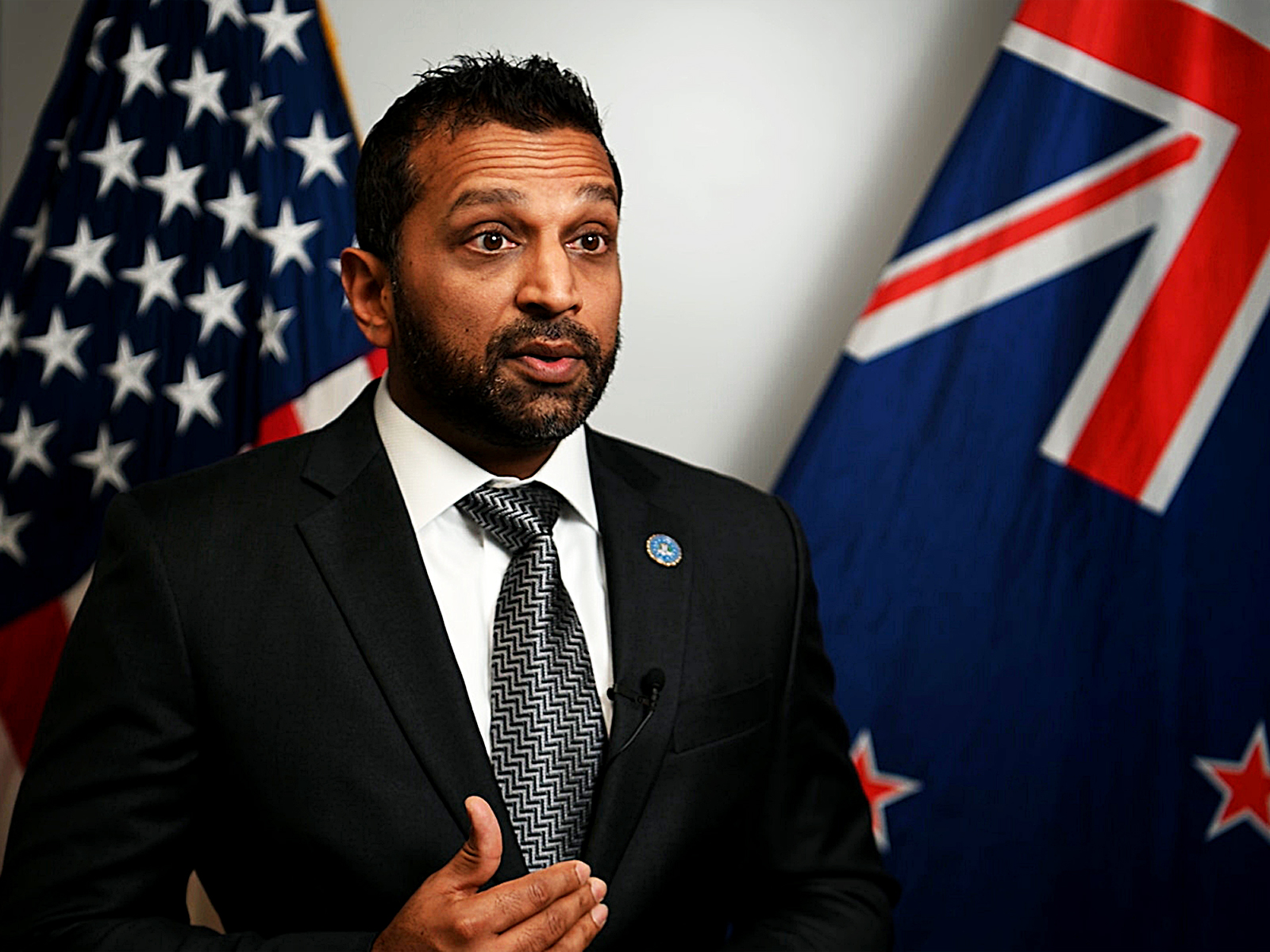
Fresh details have emerged about FBI Director Kash Patel’s discreet visit to New Zealand — a trip originally planned to be kept under wraps until it was unexpectedly exposed by a journalist. Documents released under the Official Information Act (OIA) outline Patel’s meetings, itinerary, and the cost of his stay, offering a rare insight into one of the most sensitive diplomatic events of Donald Trump’s second presidency so far.
According to the documents, New Zealand’s spy minister Judith Collins approved a $10,000 budget for Patel and an accompanying official to cover accommodation, meals, flights, and limited cultural activities during the three-day visit. The New Zealand Security and Intelligence Service (SIS) briefing stated: “The visit will not be publicly avowed, for security reasons, until after the Director has left New Zealand.”
Secrecy fell apart when a Press Gallery journalist spotted Patel in the Beehive basement after his meeting with Foreign Minister Winston Peters on 30 July. Officials initially declined to explain his presence. By the next day, the US embassy confirmed Patel’s mission, announcing the FBI was opening a “standalone office” in Wellington.
The SIS briefing, dated 25 June, described Patel as a figure of “significant influence” in Washington as a direct Trump appointee. Officials saw the visit as an opportunity for New Zealand to reaffirm its role in intelligence-sharing with the US and the broader Five Eyes alliance.
“This visit provides an opportunity for New Zealand to continue to enhance the bilateral relationship with the United States,” the note stated, adding that the trip would allow Patel to receive classified briefings from the New Zealand Intelligence Community.
Patel’s itinerary included a series of high-level engagements. On Wednesday evening, he dined with SIS Director-General Andrew Hampton and GCSB Director-General Andrew Clark at a US embassy dinner. The next morning, Patel joined Collins, Hampton, and Clark for the ribbon-cutting ceremony at the new FBI office in Wellington.
Later that day, Patel attended a closed-door roundtable with senior officials from the SIS, GCSB, Ministry of Foreign Affairs, Customs, and the Department of Prime Minister and Cabinet. Topics included counterterrorism, cybersecurity, espionage, organised crime, and regional security.
That evening, Collins hosted an official government dinner with Patel and up to 14 guests, including Police Commissioner Andrew Coster. Earlier drafts of the programme included cultural activities, though it is unclear if these went ahead. Patel also met with Police Minister Mark Mitchell and Collins, in her role as intelligence minister, during his stay. He departed New Zealand on Friday.
The revelation of Patel’s visit and the announcement of the FBI office triggered political debate. Collins stressed that the FBI’s role in New Zealand had not fundamentally changed. The FBI had operated out of the US embassy in Wellington since 2017, but the key change was that it would now report directly to Washington rather than via Canberra.
“All intelligence sharing is carried out within New Zealand law and human rights obligations,” Collins emphasised. “New Zealand derives significant benefit from our relationship with the FBI. Their presence helps keep New Zealanders safe.”
Despite this reassurance, Labour and the Green Party expressed surprise at the announcement, questioning the lack of transparency around the visit.
During his trip, Patel said the new attaché office would enhance efforts to counter Chinese Communist Party activity in the Indo-Pacific. Collins and Peters, however, downplayed this, framing the change as focused primarily on combating organised crime.
Patel, who became FBI Director earlier this year, is a long-time Trump loyalist and former Pentagon chief of staff. Trump has praised him as a “brilliant lawyer, investigator and ‘America First’ fighter,” underscoring his strong political ties in Washington.
Though brief and deliberately low-profile, Patel’s visit highlighted the weight Washington places on its security relationship with Wellington. What began as a tightly controlled diplomatic mission ended up revealing the FBI’s expanded presence in the Pacific, a development with implications for New Zealand’s security policy and its delicate balance in an increasingly contested region.
-TIN Bureau