


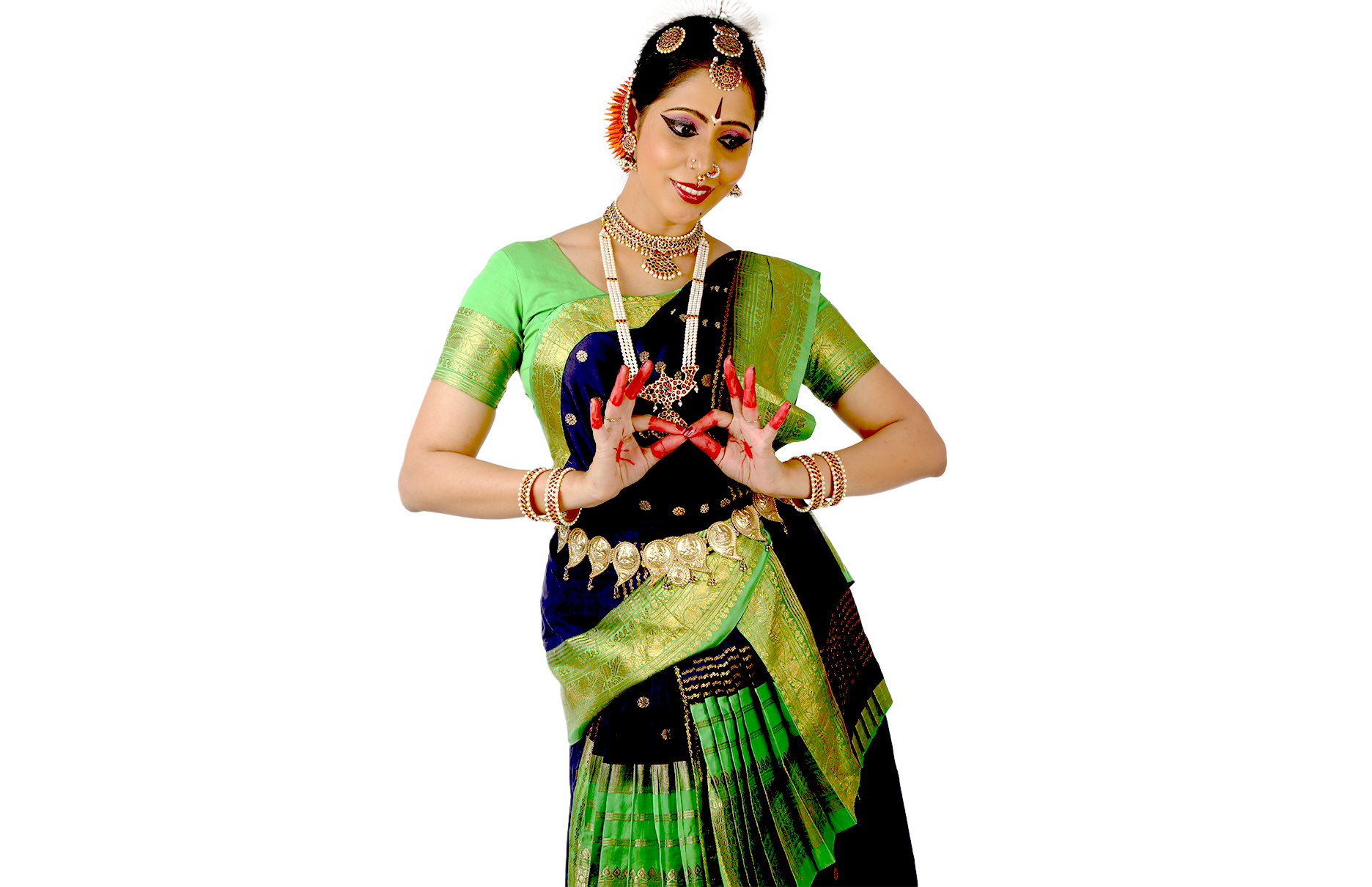
Abhinaya, an art of expression is an important mode to instigate the bhava within the artist. Bharata in his Natyasastra has clearly defined the aspects of abhinaya and its importance. Abhinaya, according to Bharata are divided into four type’s i.e Angika Abhinaya (the abhinaya expressed via bodily movements), Vachika Abhinaya (the abhinaya articulated via the speech or lyrics), Aharya Abhinaya (the expressions communicated as the part of costumes, makeup, and stage décor) and Sathvika Abhinaya (the expressions conveyed through the experience of the soul).
Amongst the four, the art of decoration has been explained in lengths under the Aharya Abhinya category. It is very well understood that aharya is not just the important factor in Natya, but also in the day-to-day life. How, wearing an outwear reflects the personality of a human, similarly the right costume reflects the personality of the character in the play.
Makeup is an additive feature that adds to the character define. The detailed description about each and every factor that is given by Bharata hints on the concept of Shastra & Prayoga. May be looking at the day-to-day activities around him, he is able to give such underpinning details about each attribute. Shastra becomes prayoga and vice versa. What so ever be the reason, certainly the efforts of Bharata to make this characterization is worth a thought to appreciate such intellectual mind.
The applauding nature of Bharata to give the freedom to the art enthusiastic to go ahead with any kind of necessary changes required based on their location and situation is appreciable. May be this is the reason a window of opportunities opened up in many allied arts and tremendous change happened in the costume design esp. in the field of bhartanatyam.
The 9 yards saree which was worn during the performance ensured more stability, right posture to the artist was slowly revolutionized to Pant costumes during the period of Rukmini Devi Arundale. This was popularly adopted not only in dance fraternity but also the movie industry. It was Dr. Padma Subramanyam who brought in many more addition and variations to the costume with the thought of providing flexibility to the performers. Inspired by sculptures she also gave a different look with regard to hairstyling. Veteran artist Sudharani Raghupathy worked on highlighting the blouses on the sleeves with contrast colors. Guru Chitra Vishwesaran used mix and match of different fabrics and colours. The journey of refinement continued happening till date not just with costumes but also jewellery. The gold, emeralds, pearls etc which were used in earlier days were replaced by temple jewellery.
It is always the Aharya that draws the first attention in any performance. Aaharya Abhinaya refers to the “extraneous representation”, wherein a proper attention to these would lead to success of the dramatic production, according to Nāṭyaśāstra chapter 23. It is obvious that different types of dramatic personae indicated first by their costumes and makeup accomplish the representation without much efforts, by means of gestures and the like.
It is always the Aharya abhinaya that creates an effect in the view of any dance drama productions. The potential ability of aharya abhinaya is just not limited to enhancing the characters but it is the mode through which a scene can be enhanced thus giving the liberty to the audience to feel the aesthetic experience. An expression through decorations is one of the most important abhinaya which goes hand in hand with the rest of the three.
Dr Rashmi Thaper